Education email templates
Open days, enrollment, end-of-term shows and parent newsletters for schools, tutors and course creators.
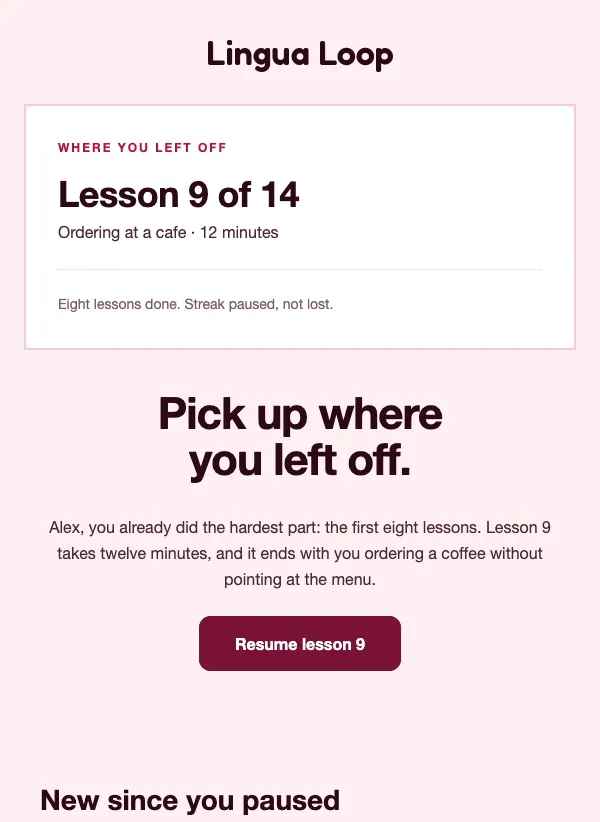 Online course win-back email for learners
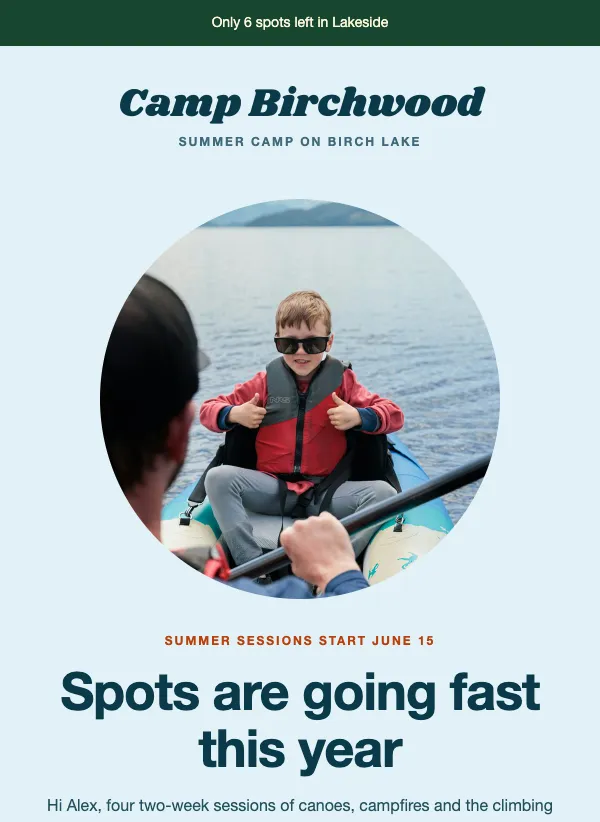 Summer camp registration
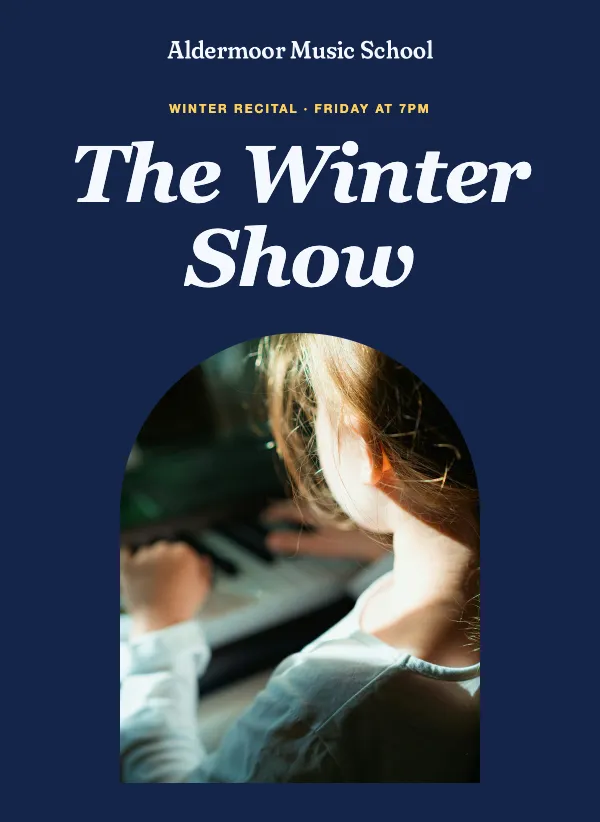 Music recital invitation
 Online course enrollment
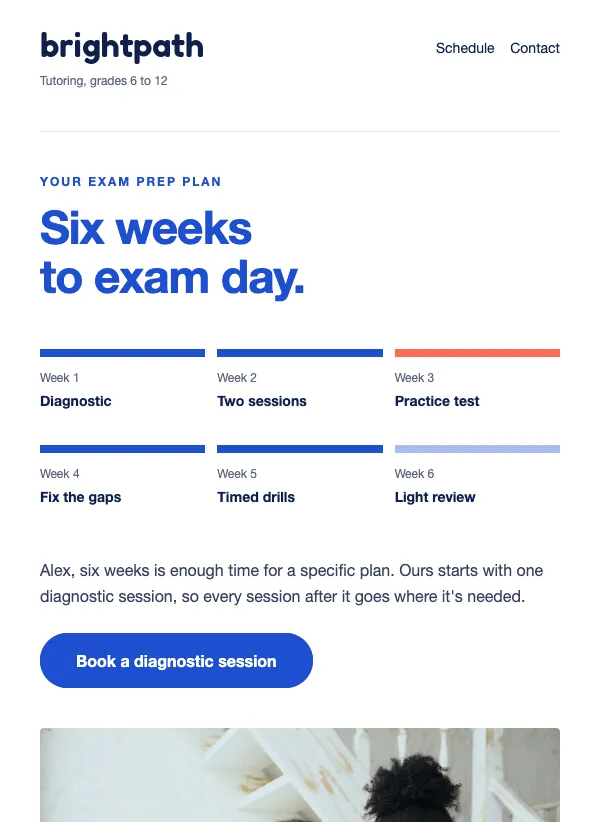 Exam prep plan email for tutors
 Daycare and preschool newsletter
 School winter concert invitation
 School open house invitation
 Course enrollment countdown
 Course graduate showcase
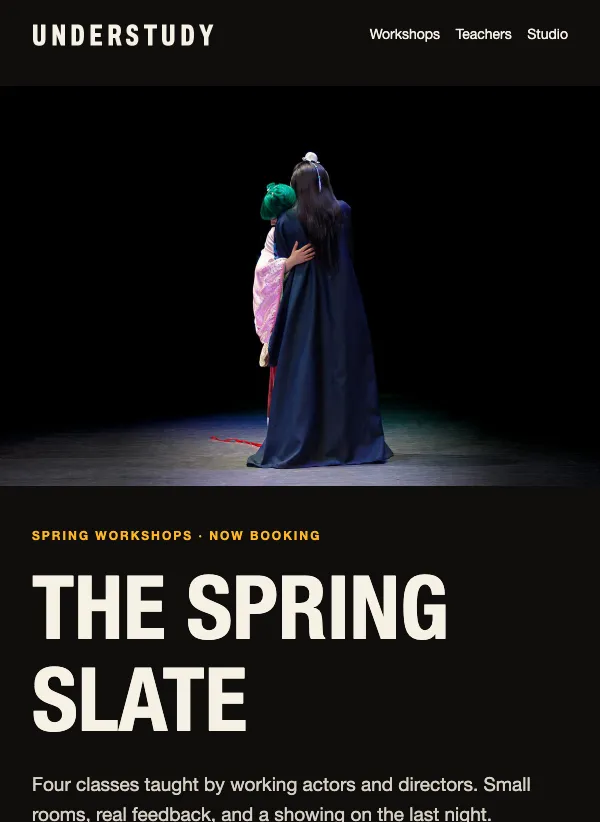 Class and workshop schedule
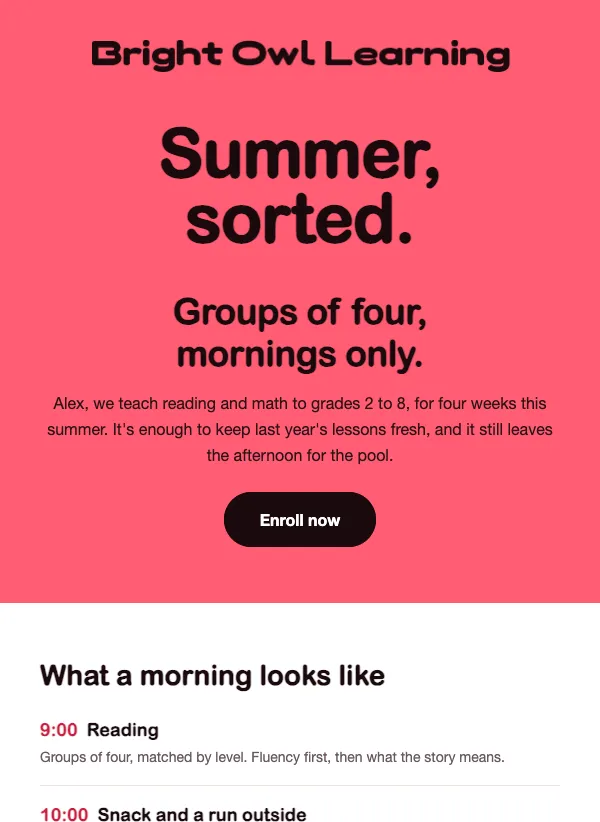 Summer tutoring program enrollment
The school year sets the calendar
Almost everything an education business sends follows the school year, even if you teach adults. Fall brings new starters and the busiest time for sign-ups. Winter has shows, recitals and the start of planning for the year ahead. Spring is open house season and the time to fill summer camps. Summer is quiet for some and the busiest weeks of the year for others.
Draw your own year on one page: when you open places, when they close, when your events happen, and when your families or students are away. Then you can see which emails you need and when each one should go out.
Filling places on a course or camp
Enrollment emails work best with a clear start date, a clear number of places and a clear closing date. The course enrollment template leads with the length and the size of the group, eight weeks and 16 seats in its example, then lists what is included and how the weeks break down. Say the numbers early, because they are what a reader is deciding on.
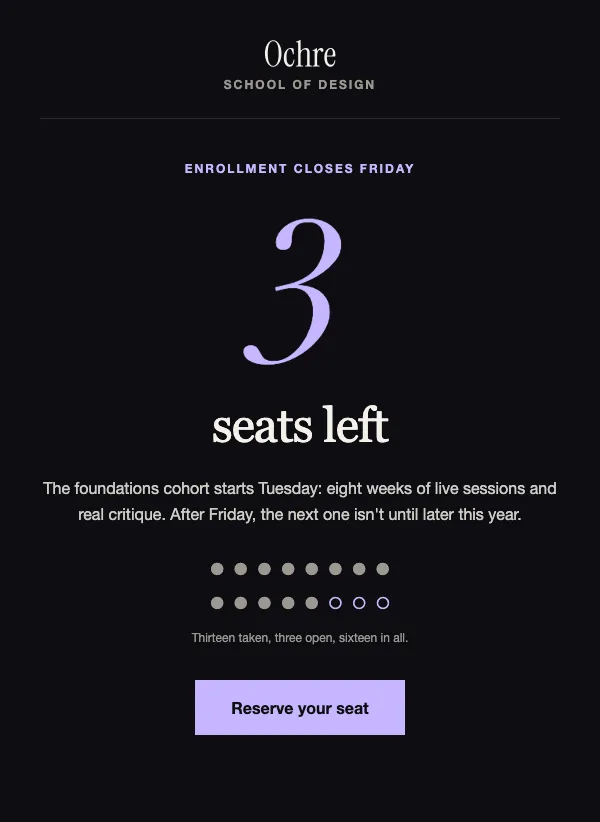
Plan backwards from the start date. Open enrollment early enough for families to plan around it, send a reminder halfway, and a final email a few days before you close. The countdown template on this page is made for that last email. "Doors close Friday: last chance to join the cohort" gives a day and a reason to act, and the template shows the seats taken and the seats left.
For camps and vacation programs, parents plan months ahead, especially for summer. "Summer spots are going fast" is the kind of subject that works, but only send it when places really are filling up. Parents talk to each other, and they notice. The camp template lists each session with how full it is, so the claim is easy to check.
Open houses
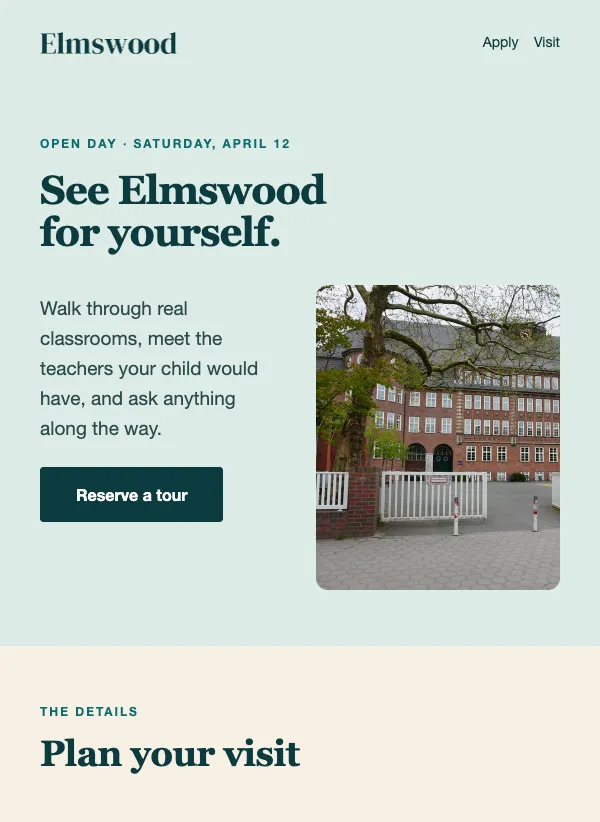
An open house email has one job: get families to sign up for a time slot. Put the day, the hours and the address in a short block at the top. The open house template follows it with a schedule for the morning, so a parent can see that there is a tour at one hour and a chance to ask questions at the next.
Answer the questions every family asks at an open house in the email itself: class sizes, fees, the daily routine and how to apply. Parents who cannot make the day can still decide, and those who come arrive with better questions.
Afterward, thank everyone who came and link to the application. Families who liked what they saw often wait for a nudge, and a short note a day or two later is easier to act on than a reminder a month on.
Shows, recitals and workshops
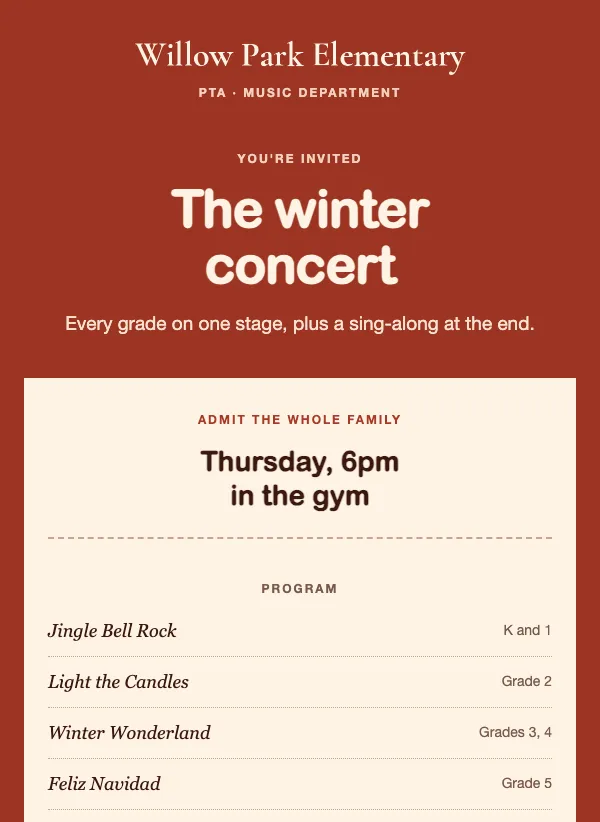
End-of-term shows and recitals are for families who are already with you. They are a chance to say thank you as much as to fill seats. "You're invited: the winter recital" is enough of a subject, because the reader knows the sender. The recital template sets out the evening like a program: when the doors open, who plays and roughly when it ends.
Workshops and short classes sell on specifics. "Our spring workshop slate is open" names what is open and the season, and the template inside lists each class with its day, its length and its price, so no one has to write back to ask.
Writing to parents, writing to learners
Know who is reading. For children's classes, preschools and schools, the reader is a parent, often busy and reading on a phone between other things. Give them the dates and anything they need to do in the first few lines, and keep the rest short. The monthly newsletter for a daycare, "The Little News: what's new this month", shows how much fits into a calm, readable page: a story or two from the classroom and a short list of dates to put on the fridge.
Anything a parent has to act on, such as a form to return, a payment date or a day you are closed, belongs at the very top of the email, before the news. Parents who only read the first few lines will still catch it.
For adult courses and tutoring, the reader is the learner. They want to know what they will be able to do at the end, how much time it takes, and what it costs. A study plan, like "Your exam prep plan, six weeks out", helps them see the path from here to the result: a first session to find the gaps, regular sessions after that and a timed practice test.
Show what your students achieved
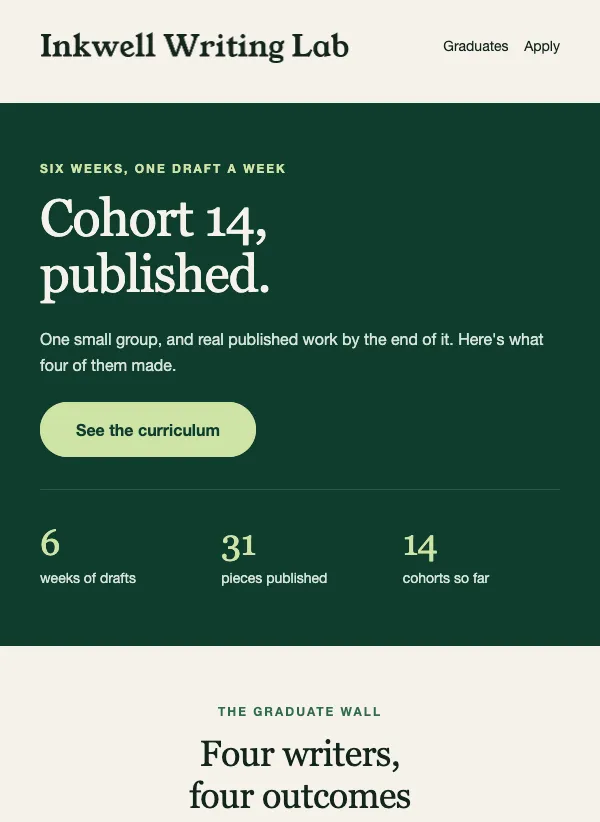
The strongest reason to join a course is seeing what the last group did. A gallery of finished projects, a few words from past students or a run of results makes the case better than any description of the course. "What the last cohort built in six weeks" is a subject that promises exactly that, and the graduate wall template is built around it.
Always ask before you share a student's work or words, and for children, ask their parents.
One tip for schools and teachers
Send the same kind of email on the same day each month. Parents learn when the newsletter arrives and look for it, and you stop having to decide each time. Write it once a month and schedule it ahead, so it goes out even in the week the term gets away from you.
Questions
Are the education templates free?
Yes. All of them are included on every plan, even the free one.
Can I use these for an online course?
Yes. The enrollment, countdown and graduate templates suit online courses as well as classes in person.
How far ahead should I open enrollment?
For summer camps and school places, months ahead, because parents plan early. For short adult courses, three to six weeks is often enough.
What should an open house email include?
The day, the hours and the address first, then a short schedule and a button to reserve a time. Add the answers to the questions families always ask.
How do I write to parents?
Put anything they have to do in the first few lines, keep the rest short, and write for a phone. Dates and deadlines matter most.
Can I send a monthly newsletter to parents?
Yes. There is a daycare newsletter template on this page, and you can write it once a month and schedule it to go out on the same day each time.
Can I change the dates and colors?
Yes. Every template opens in the drag-and-drop editor, where you can change the words, dates, colors and photos.