Ecommerce email templates
Launches, restocks, price drops and thank-yous for online shops.
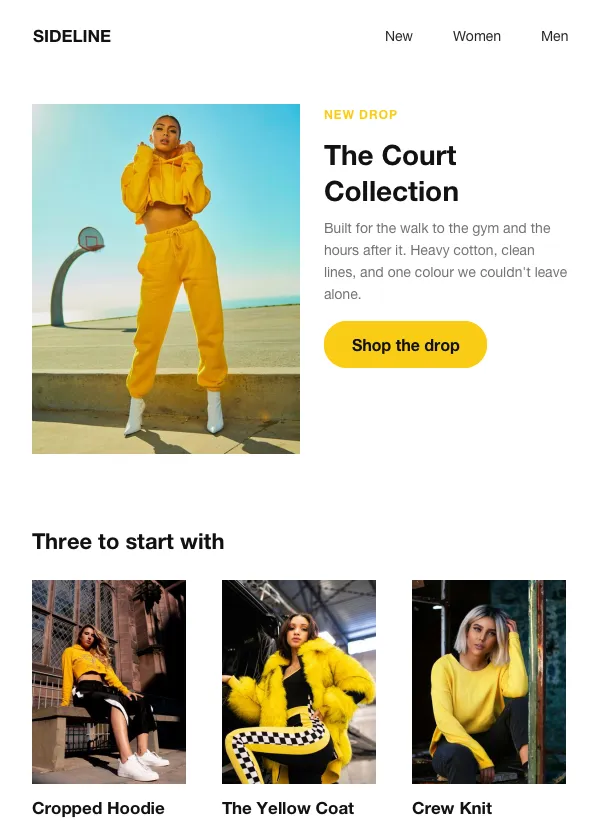 Fashion collection launch
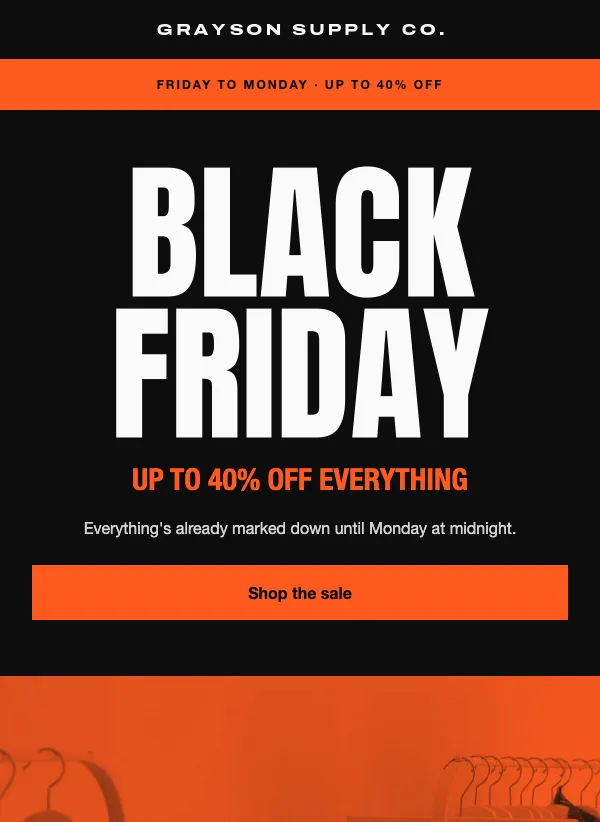 Black Friday product grid
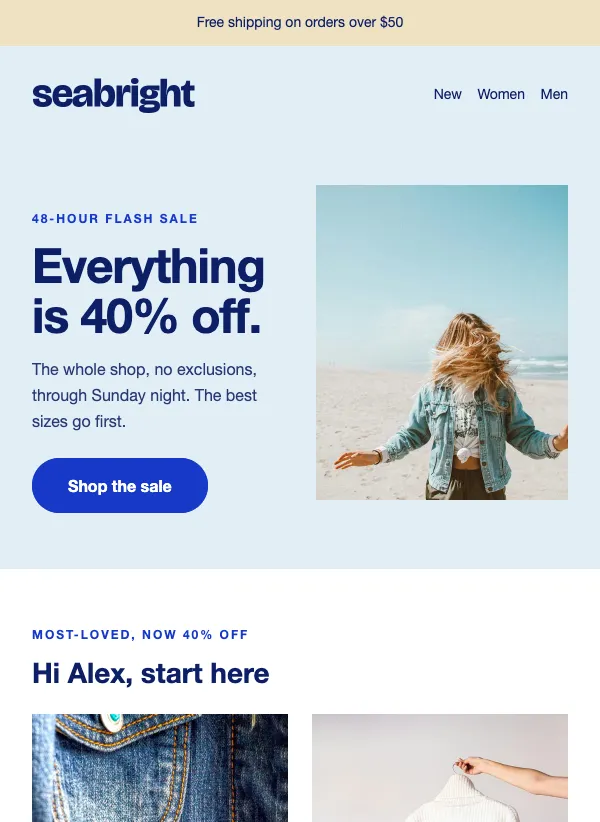 48-hour flash sale
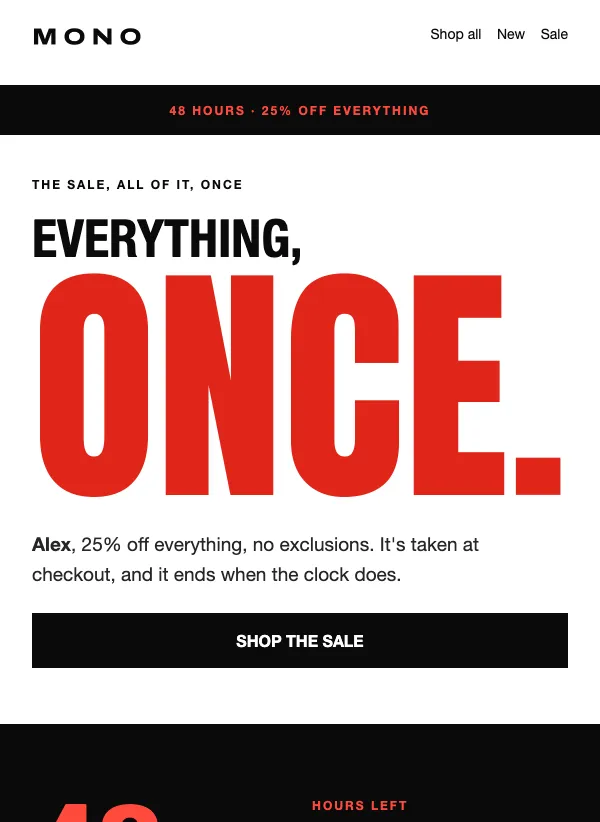 Flash sale email with giant type
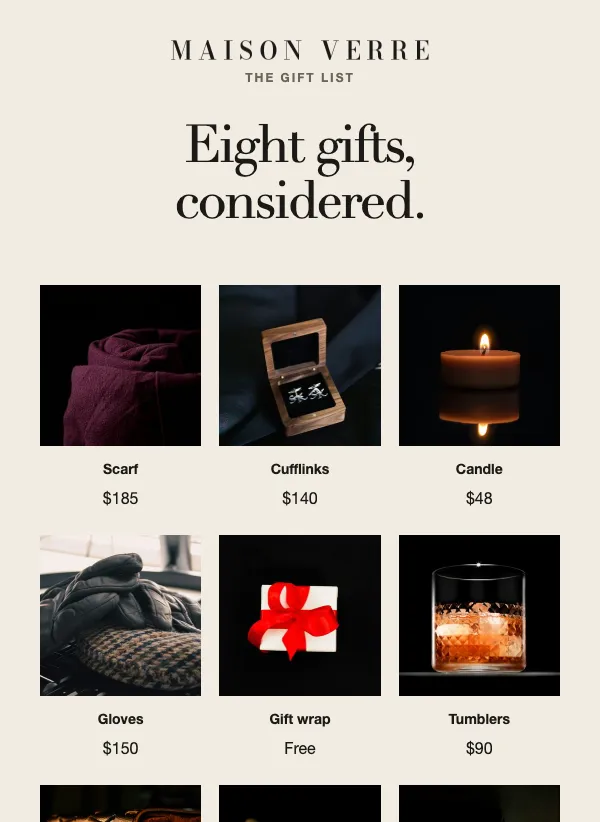 Luxury holiday gift guide
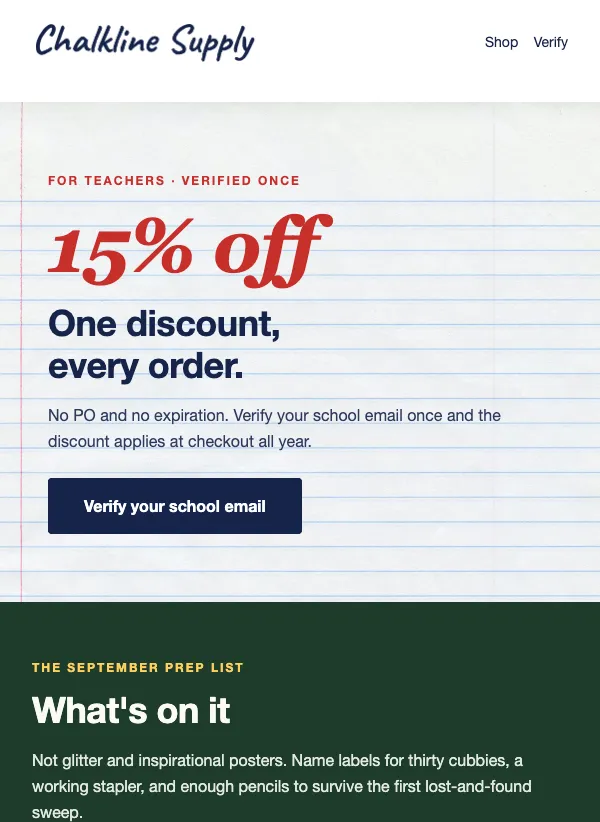 Teacher discount back-to-school
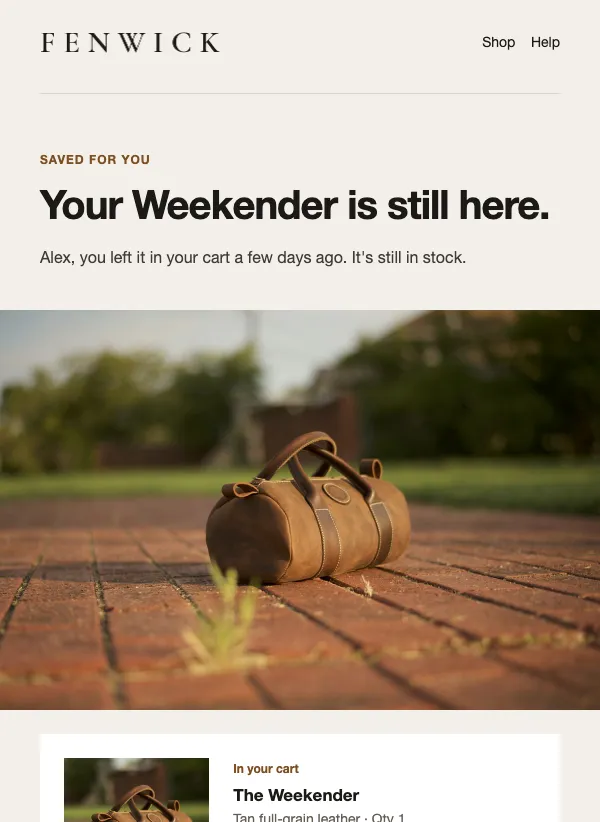 Abandoned cart reminder
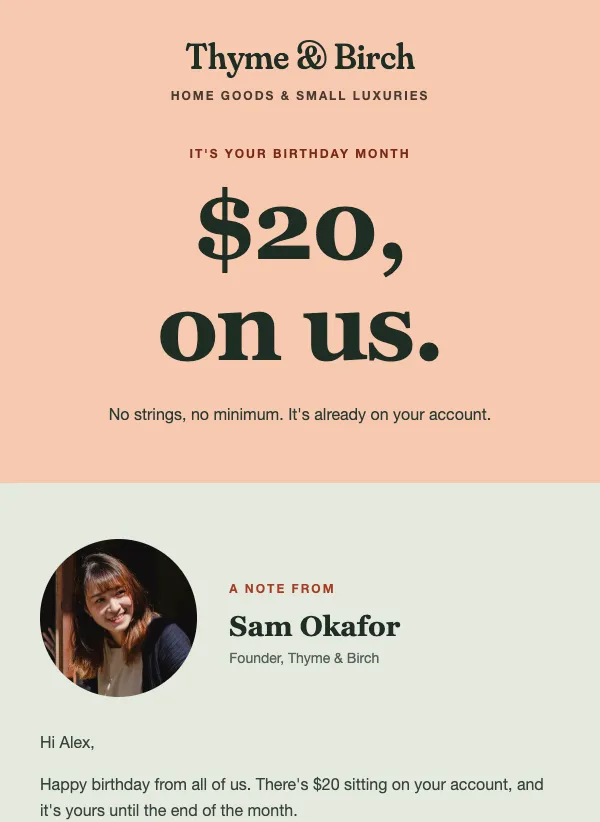 Birthday discount
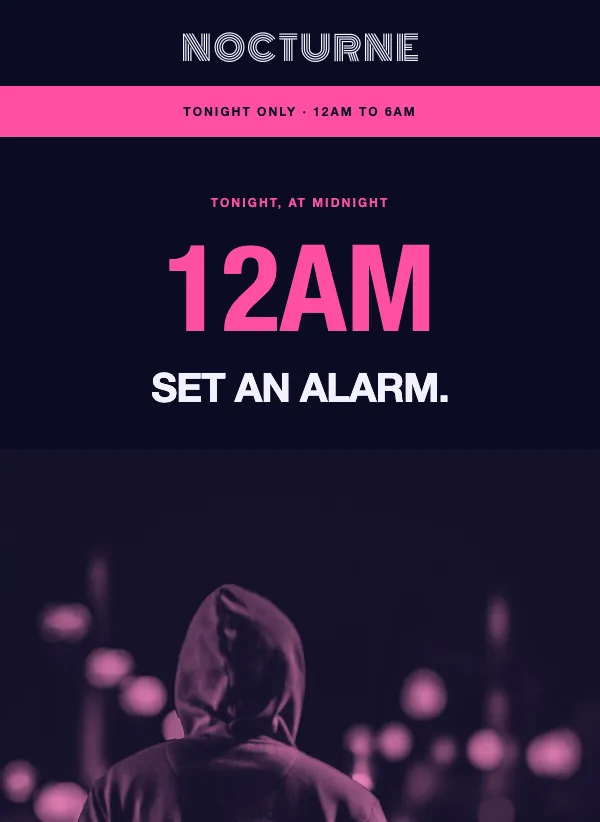 Midnight product drop announcement
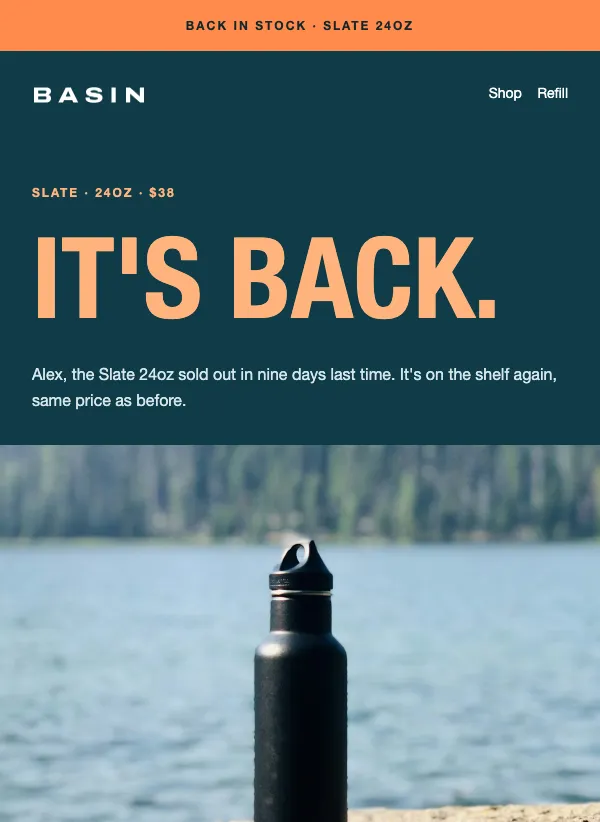 Back in stock alert
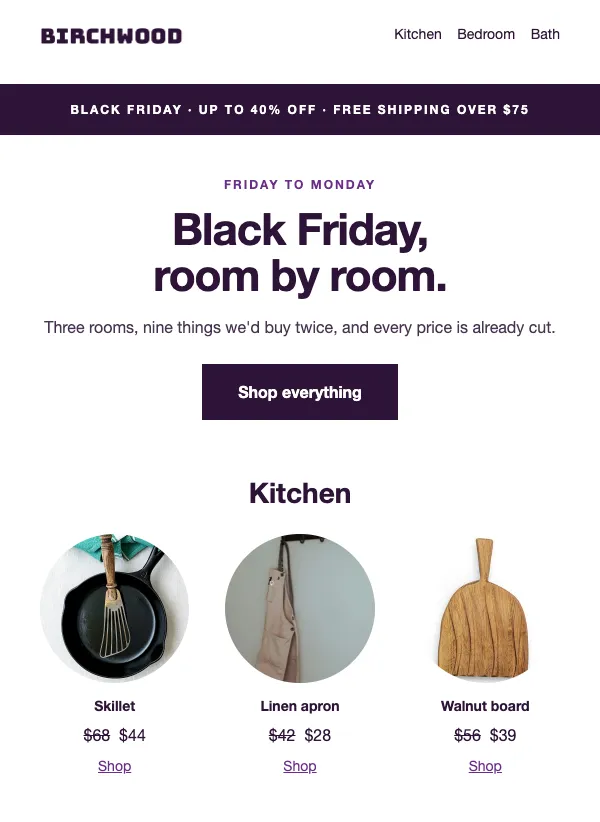 Black Friday home goods sale
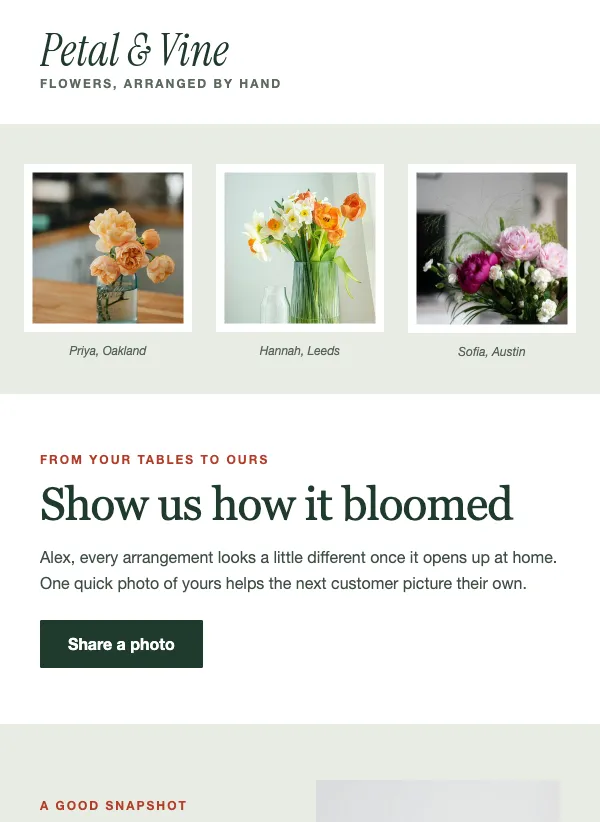 Customer photo review request
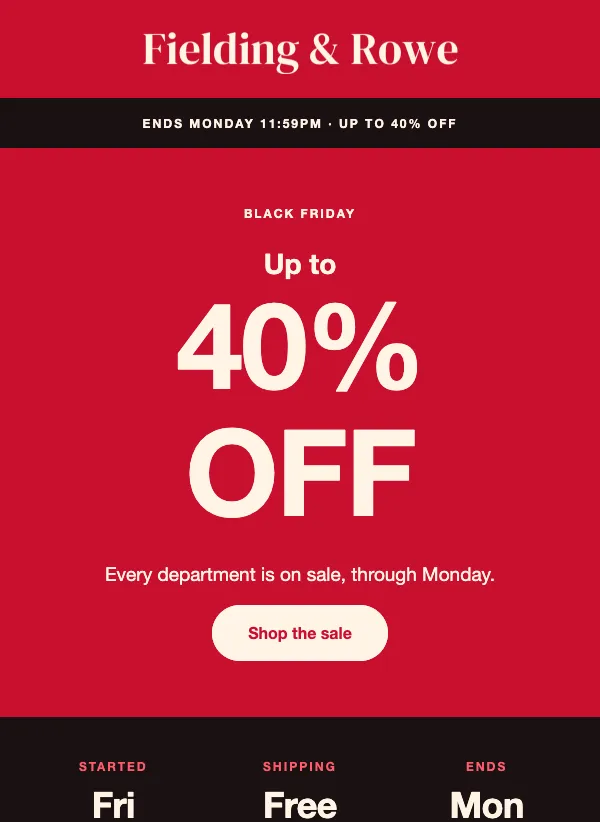 Black Friday sale countdown
 Brand collaboration launch
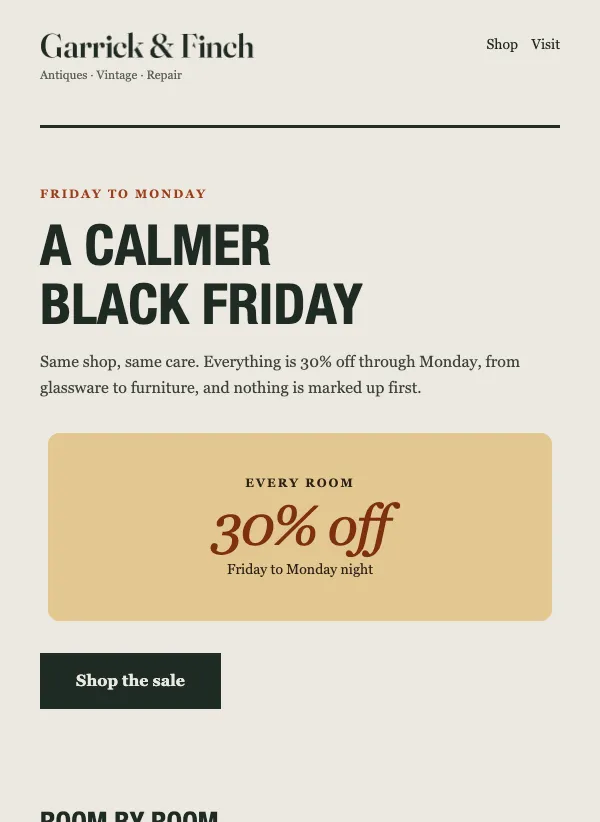 Calm Black Friday sale
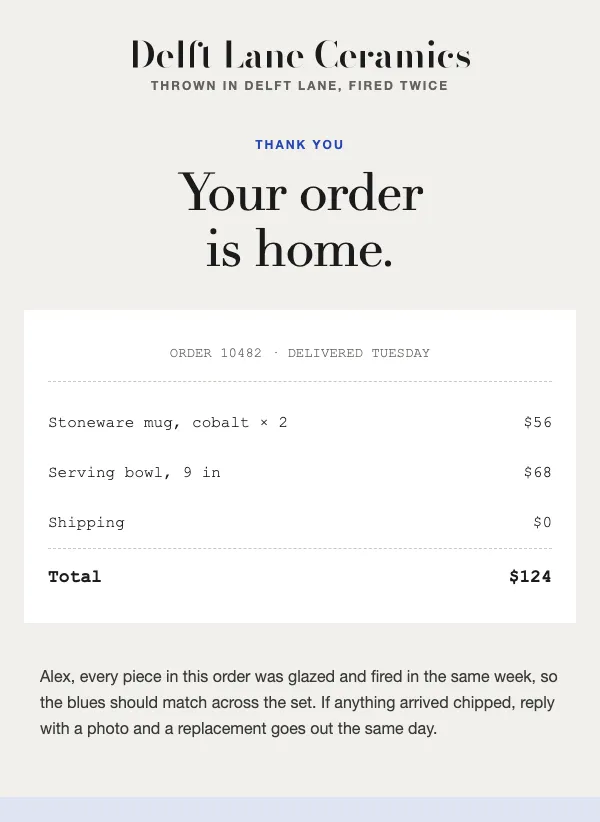 Order thank-you and review request
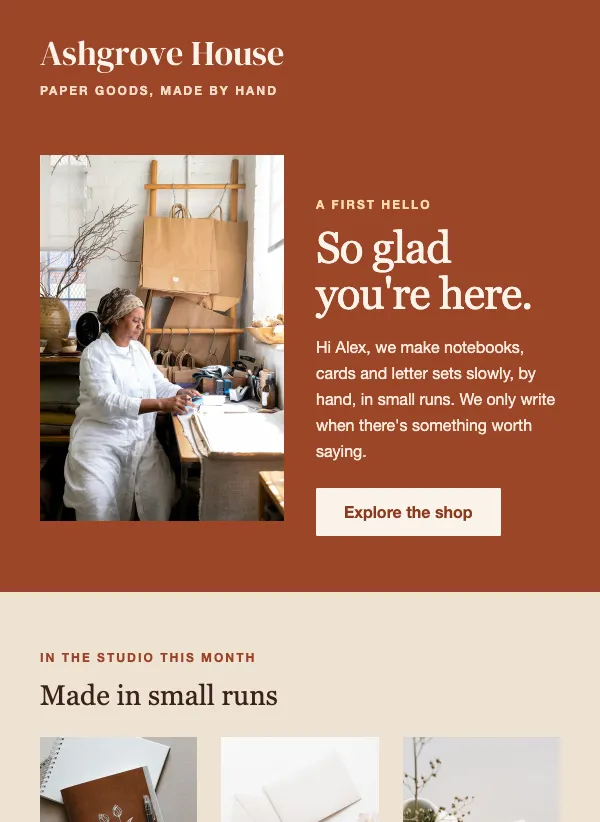 Handmade shop welcome
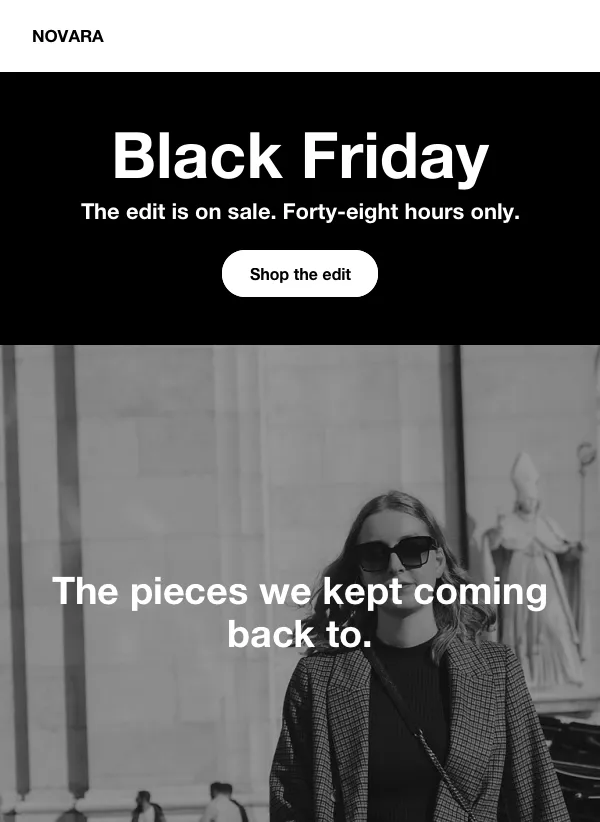 Dark Black Friday fashion sale
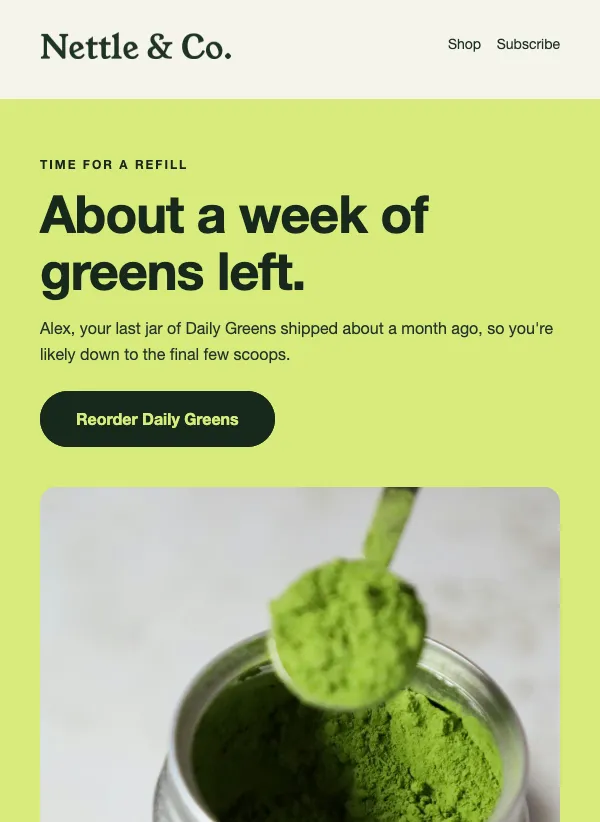 Product reorder reminder
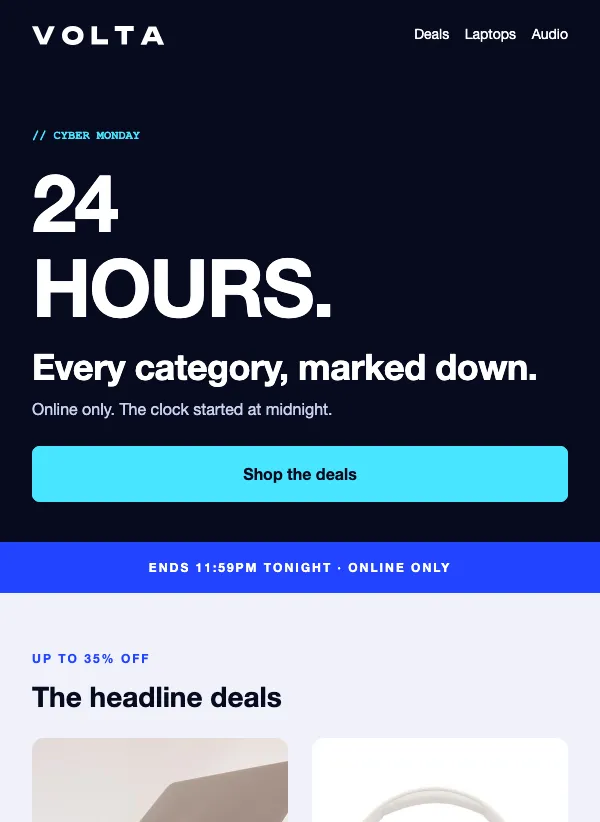 Cyber Monday tech deals
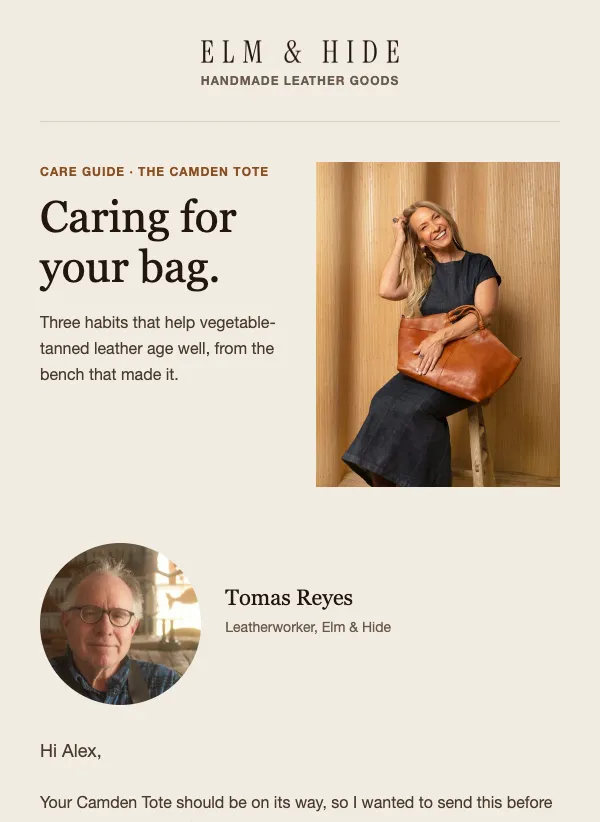 Product care guide after purchase
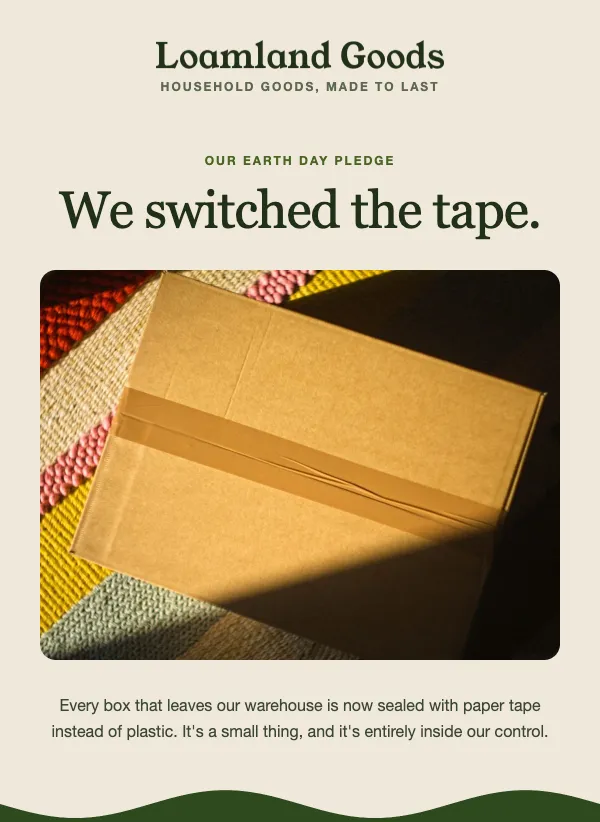 Earth Day sustainability pledge
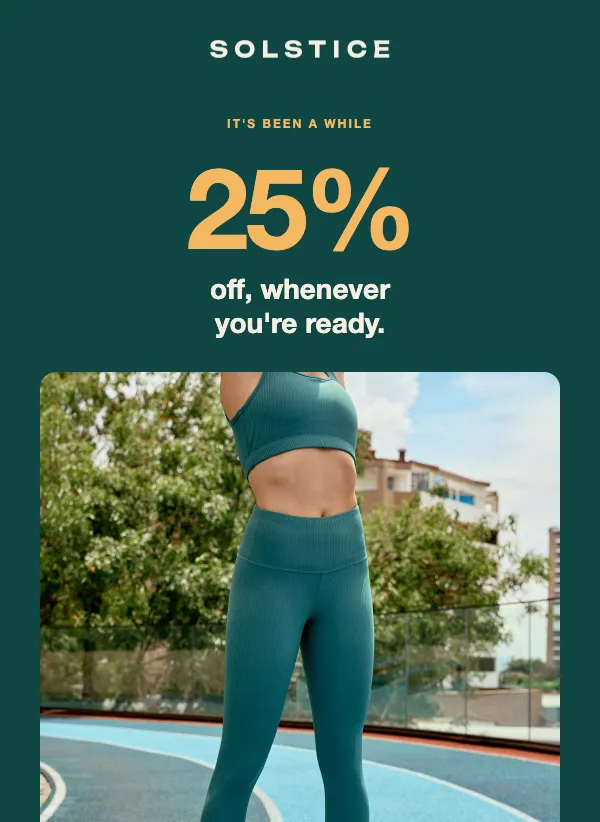 Win-back discount
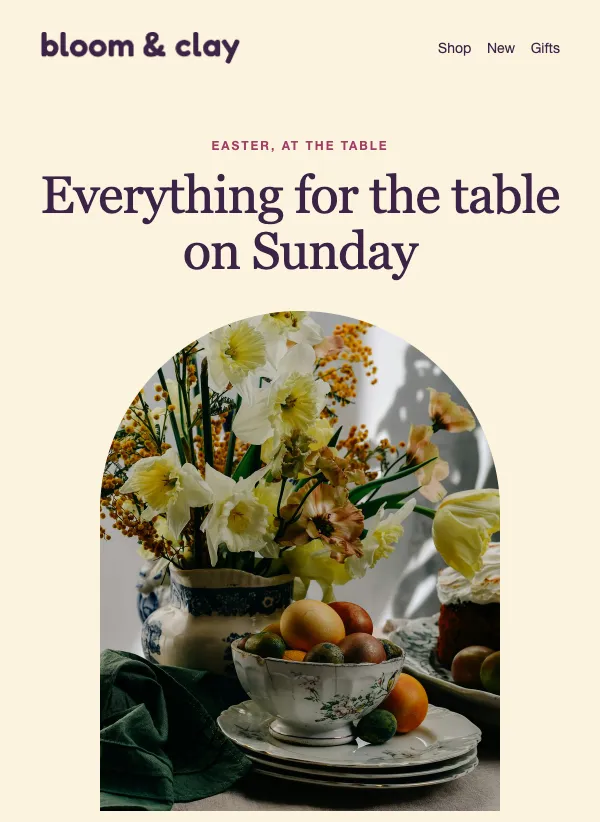 Easter shop sale
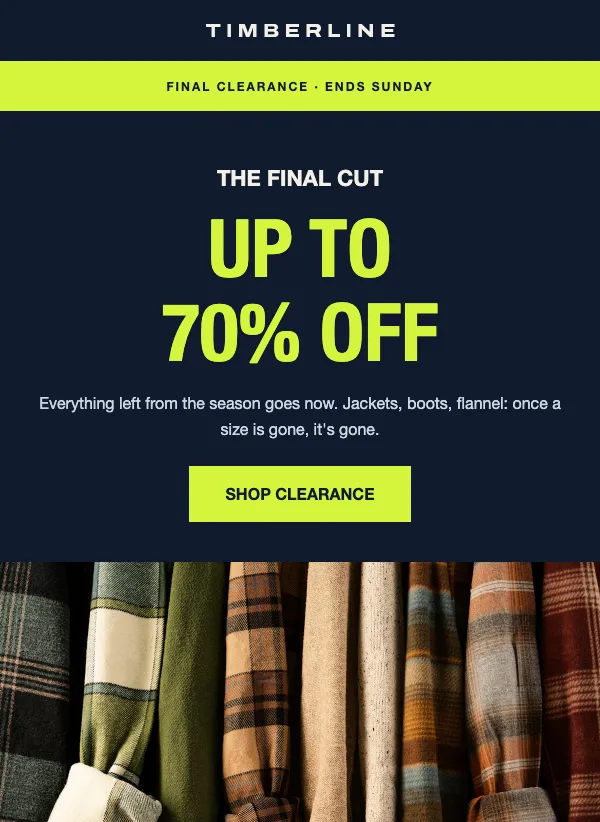 End of season clearance sale
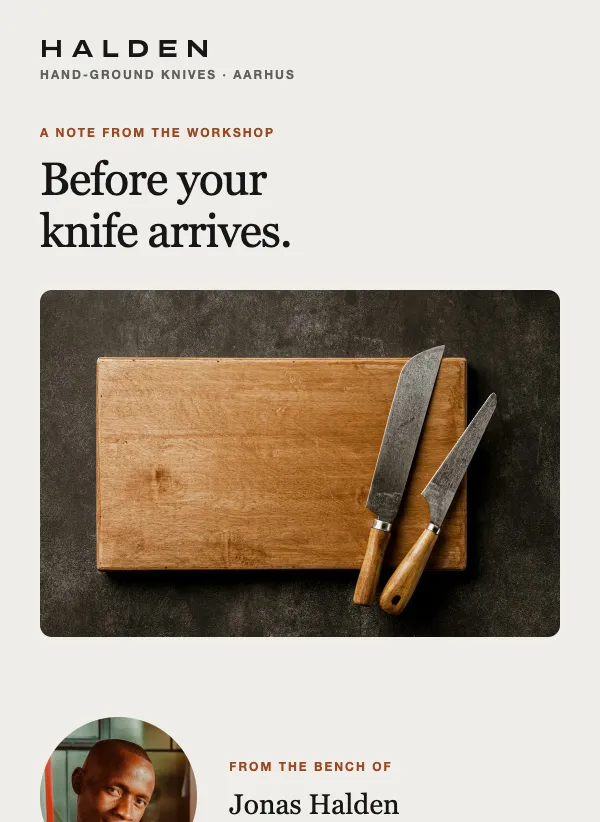 Founder welcome letter
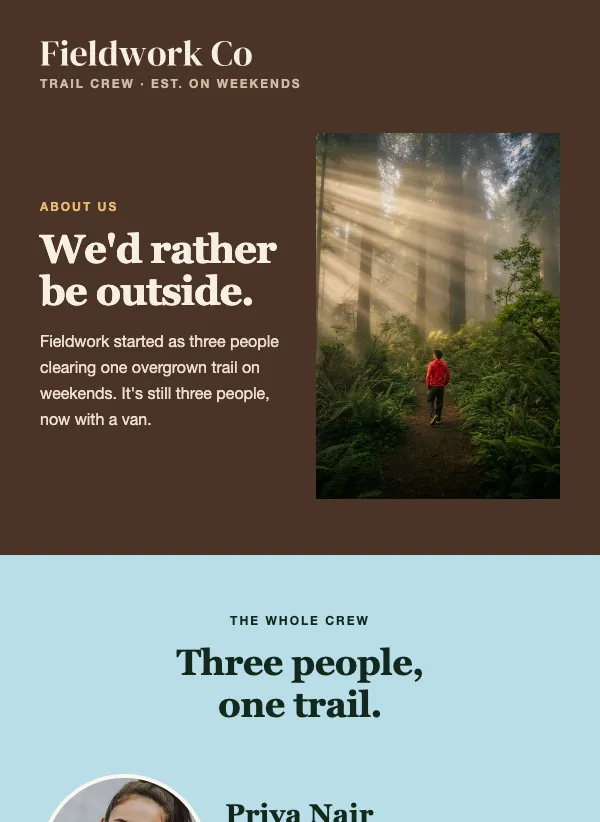 Meet the team email with round photos
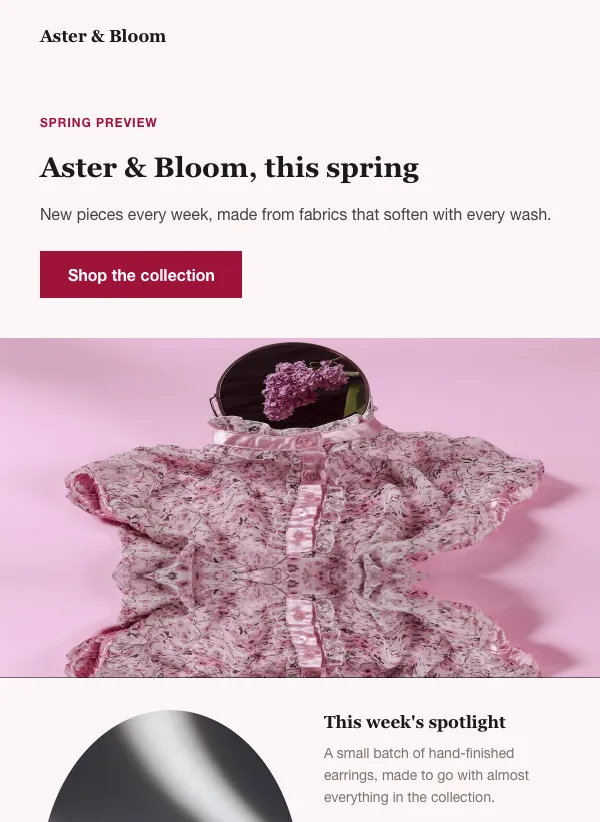 Seasonal collection launch
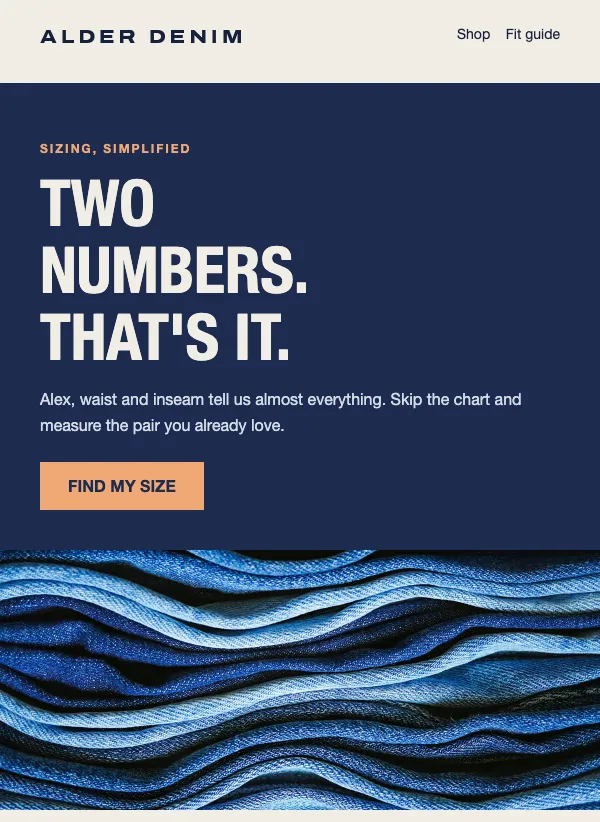 Size guide email for apparel shops
 Minimal product launch
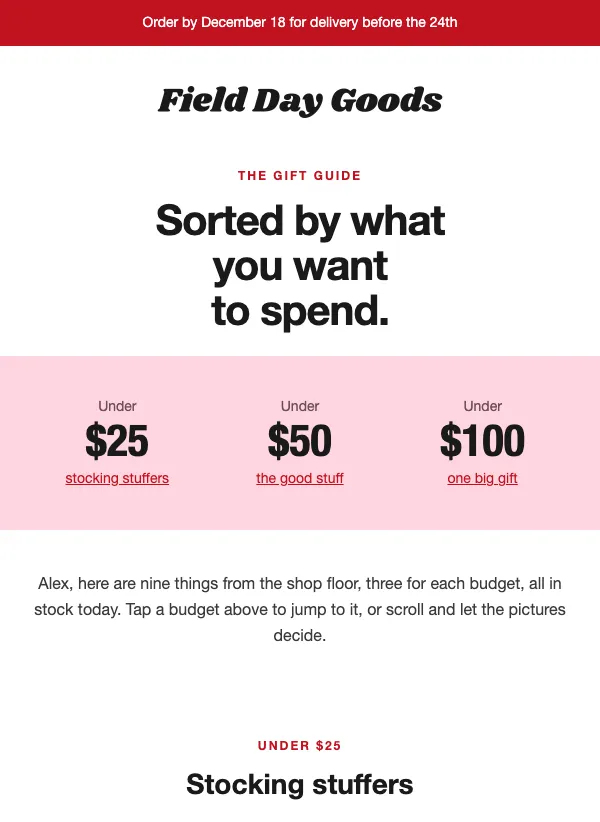 Holiday gift guide by budget
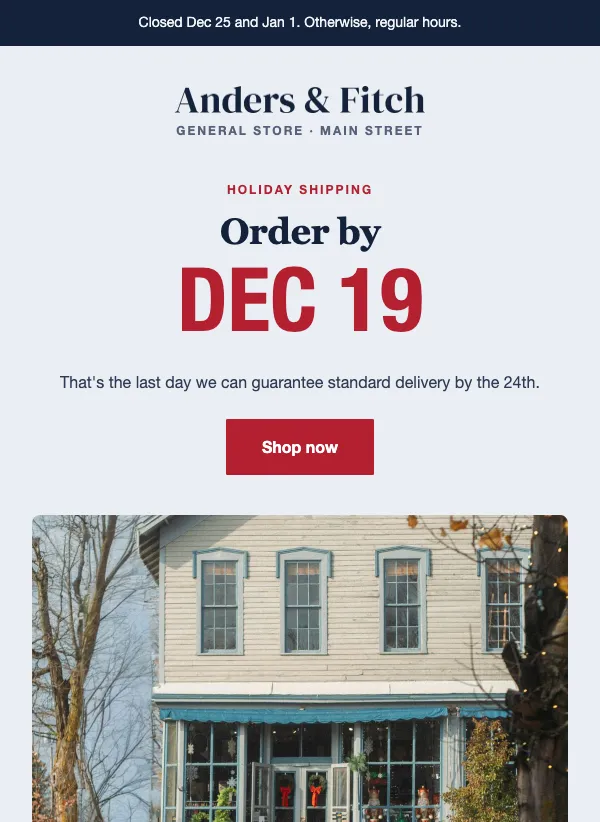 Holiday hours and shipping
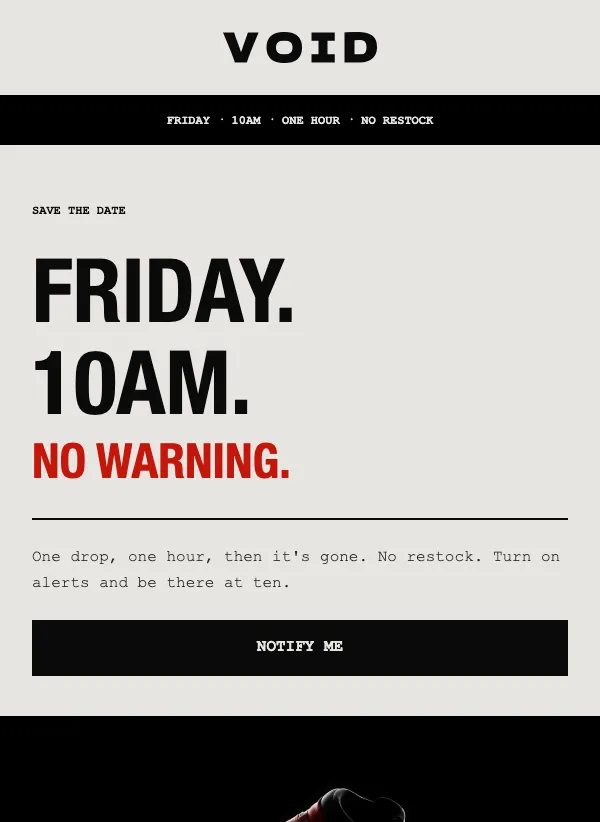 Product drop teaser
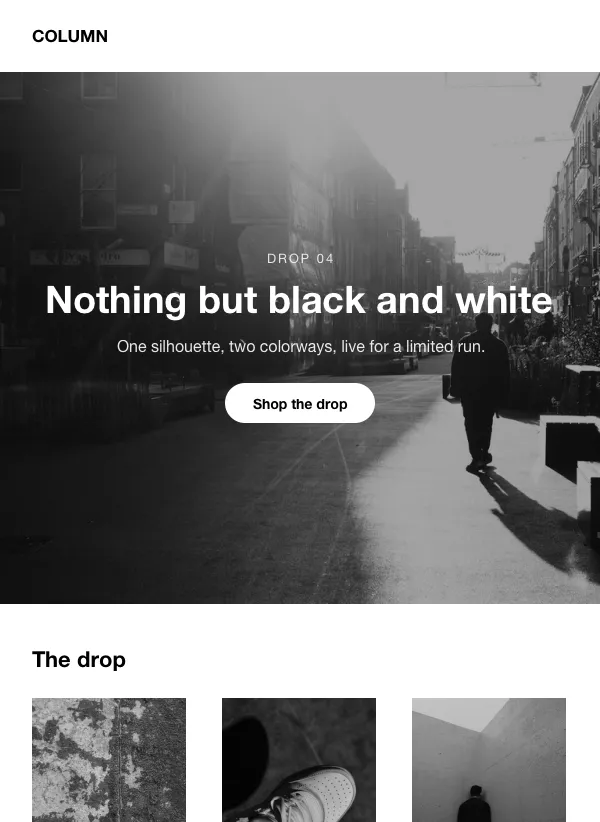 Black and white product launch
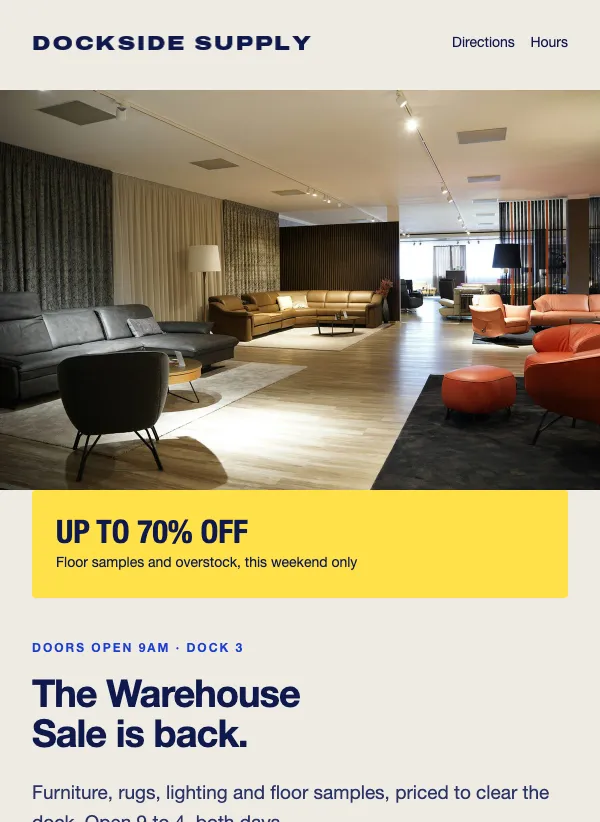 Warehouse sale announcement
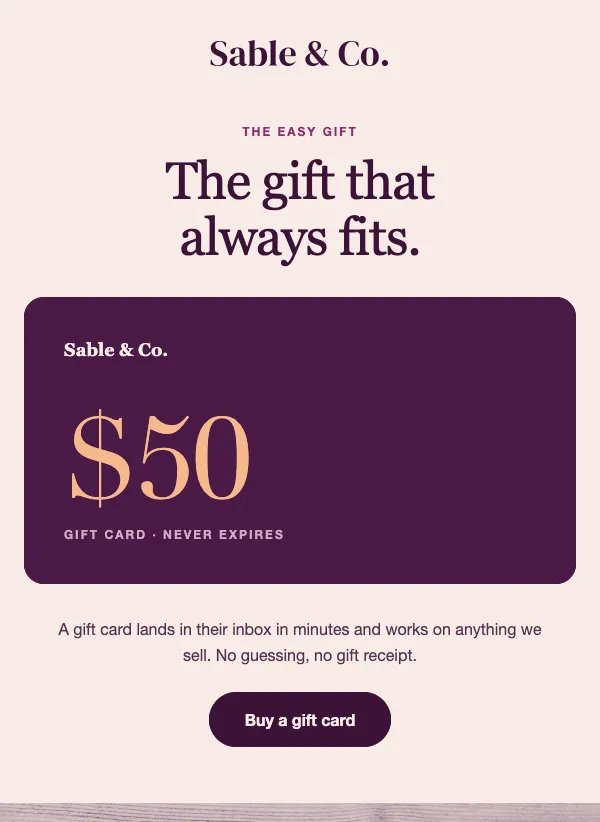 Gift card promotion
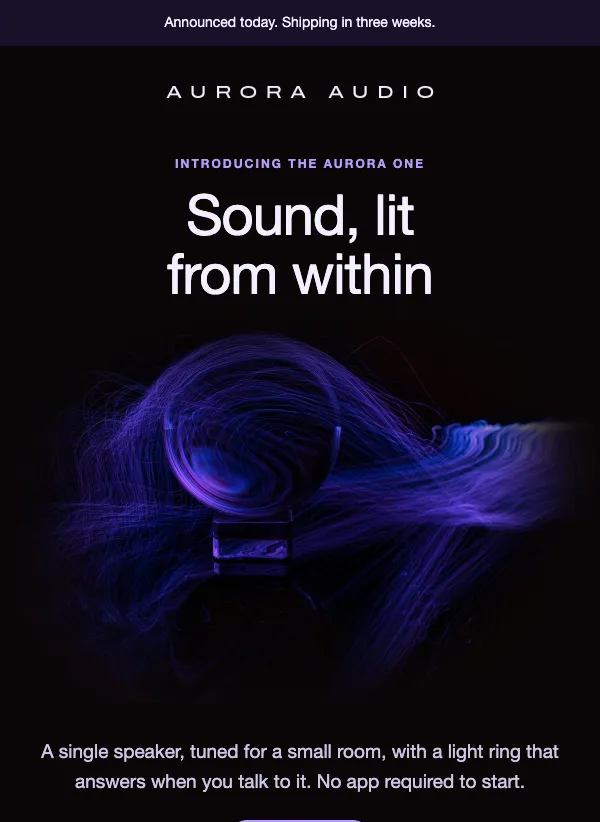 Product launch email on a dark background
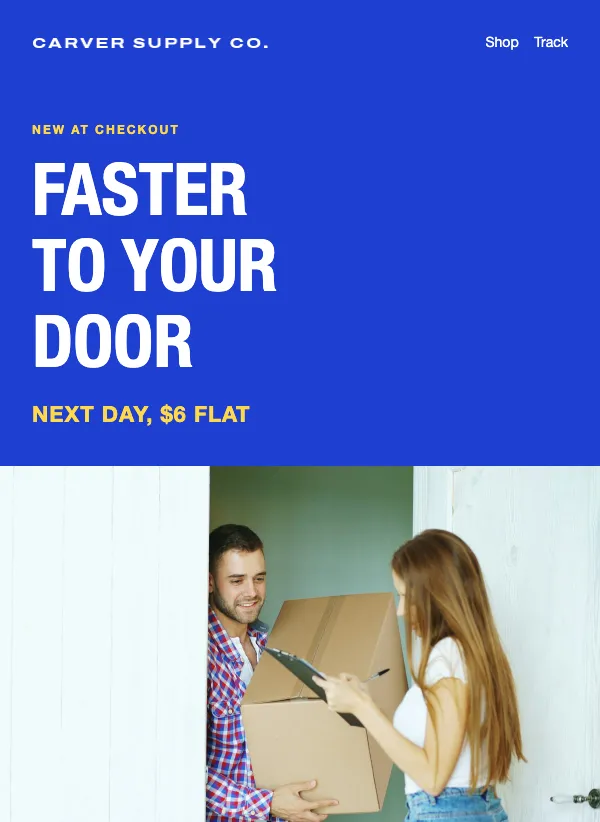 Faster shipping announcement
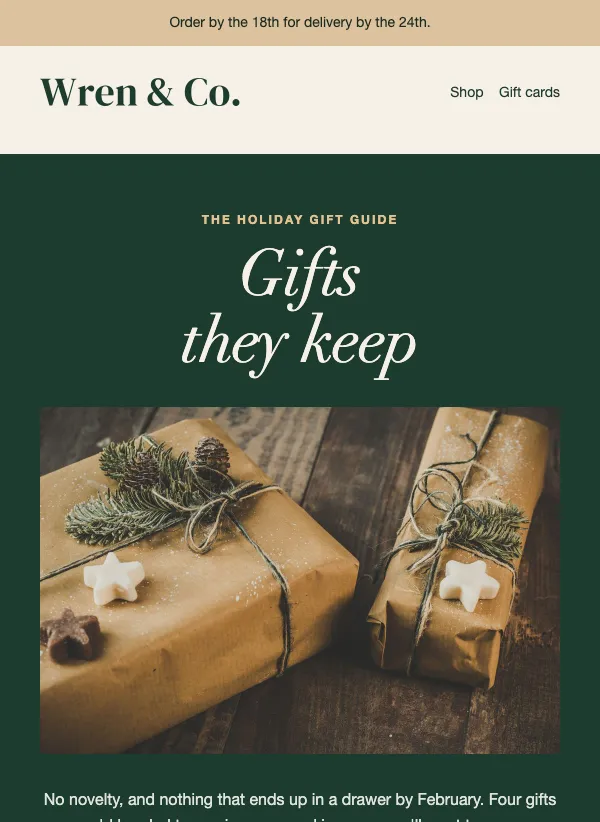 Holiday gift guide email with price tiers
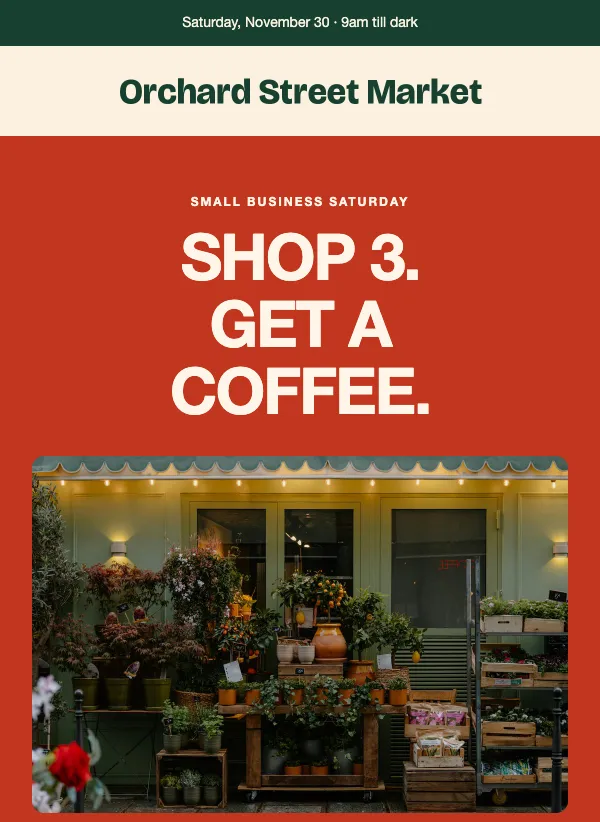 Small Business Saturday shop-local
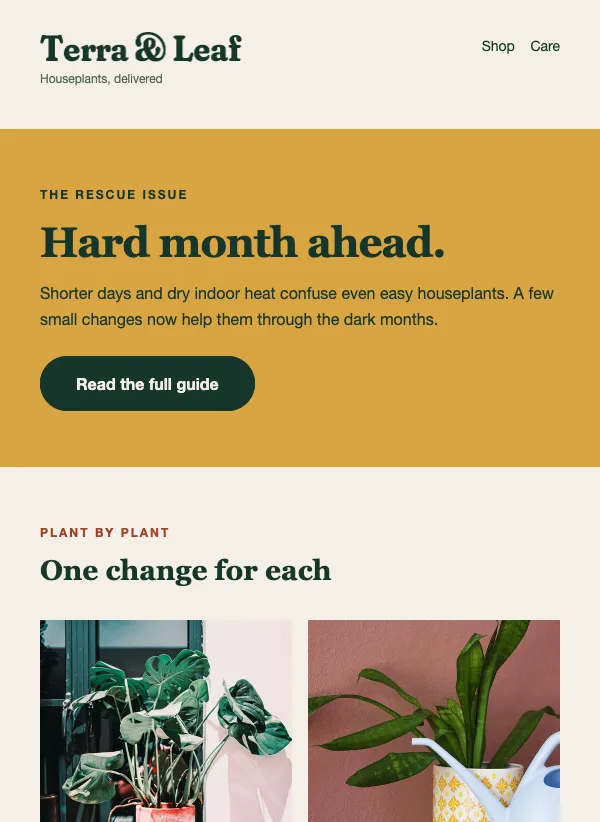 Houseplant care seasonal tips
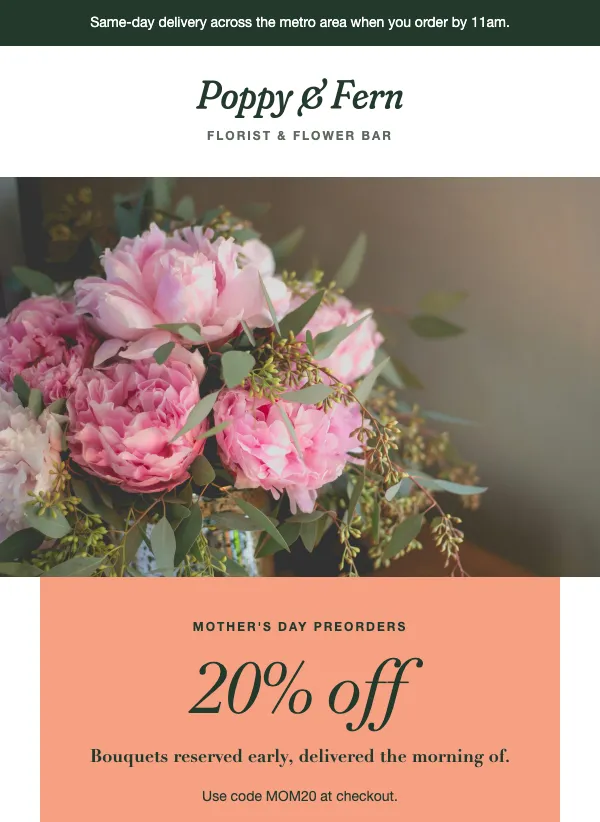 Mother's Day flower preorder
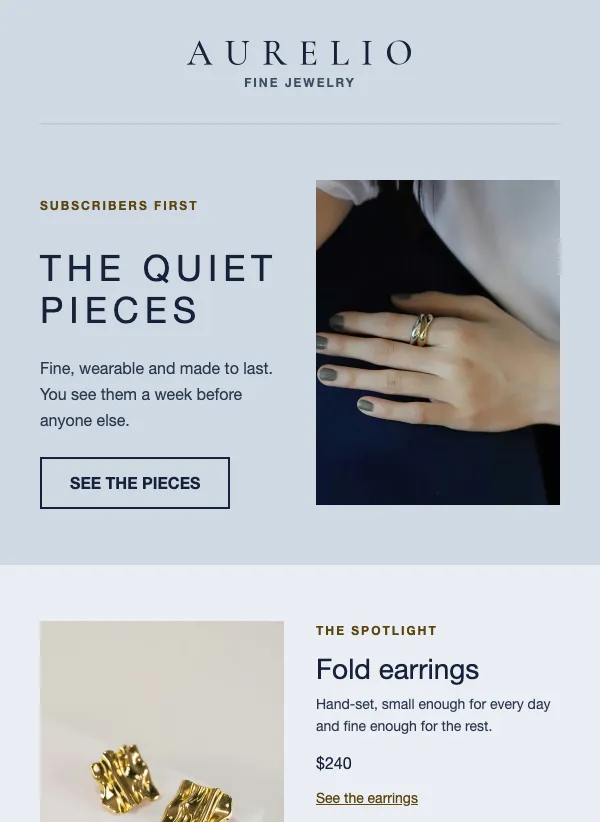 Jewelry early access collection
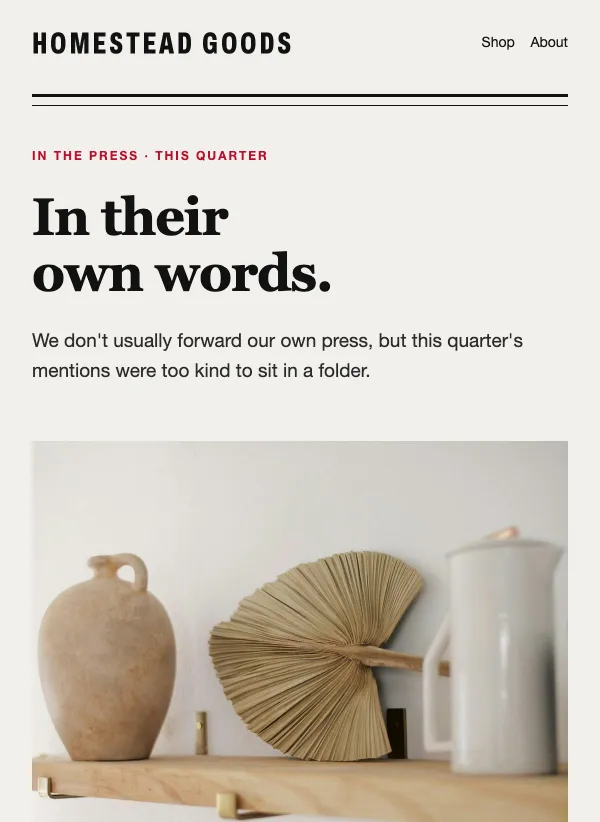 Press mentions and reviews
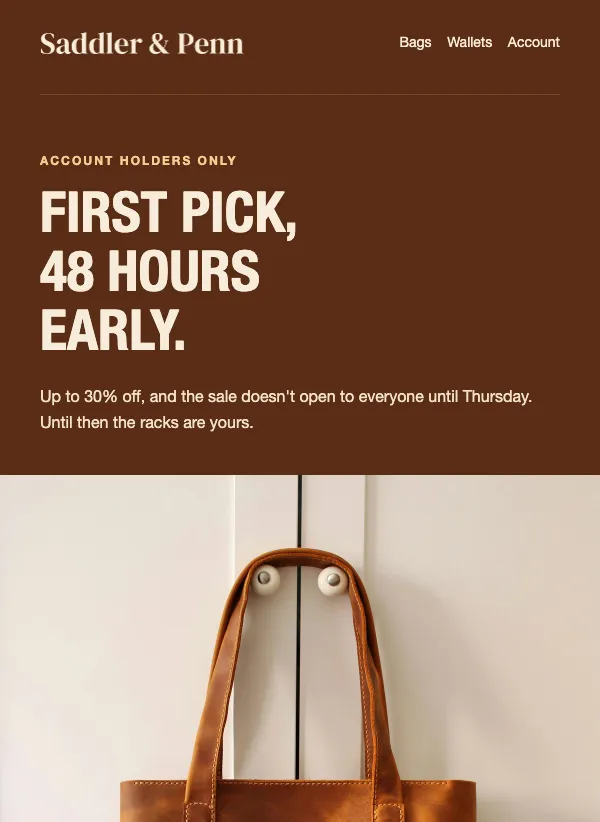 Early access member sale preview
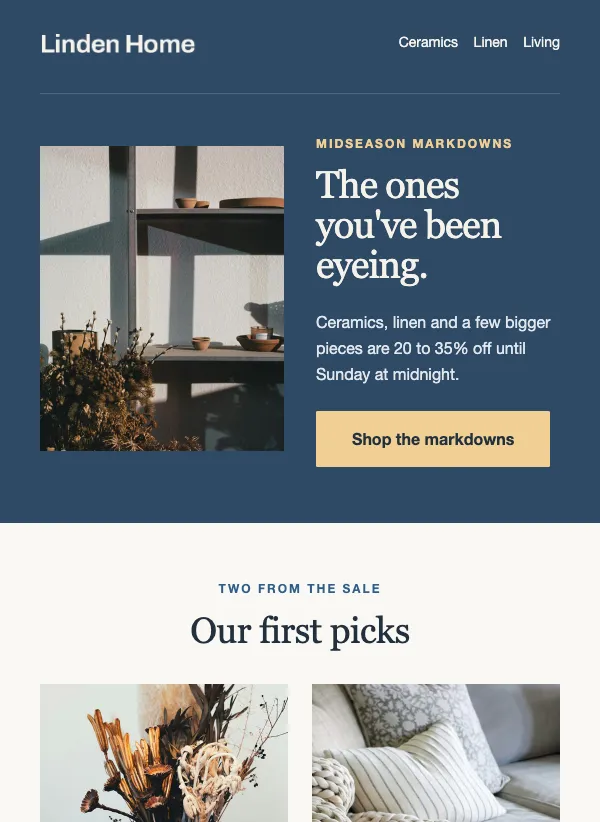 Midseason markdown sale
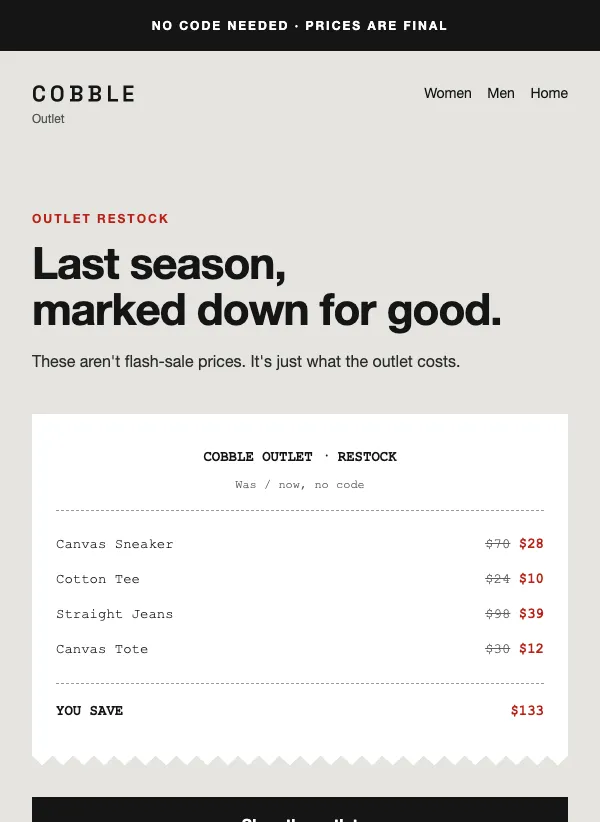 Outlet restock sale
 Marketplace seller spotlight
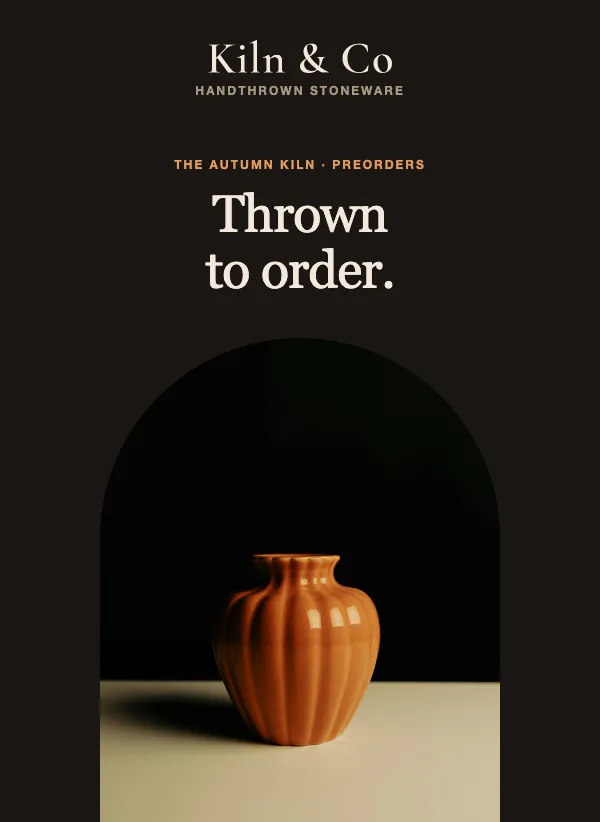 Limited preorder window
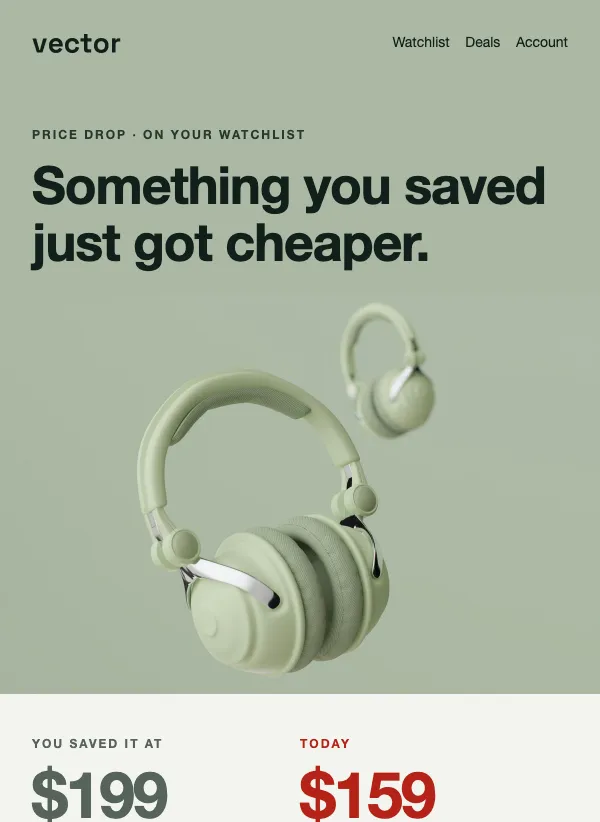 Price drop alert
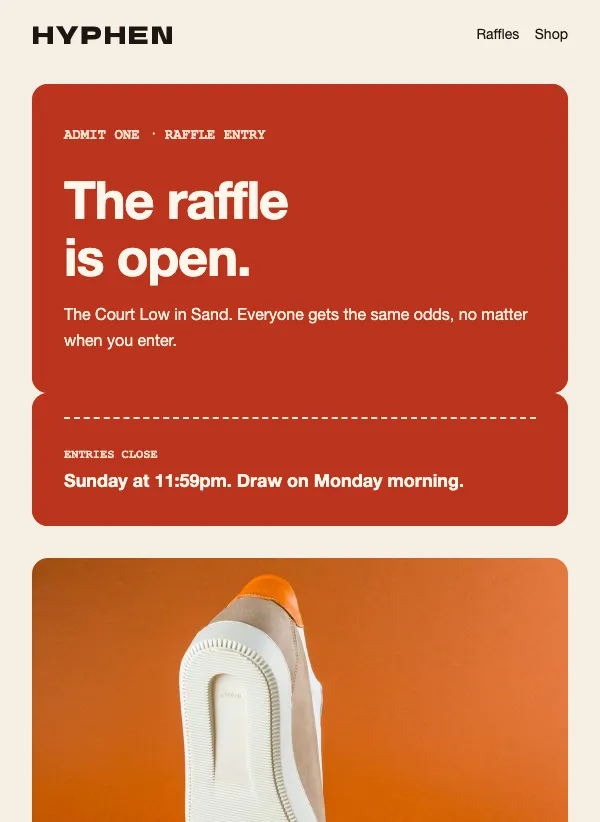 Product raffle announcement
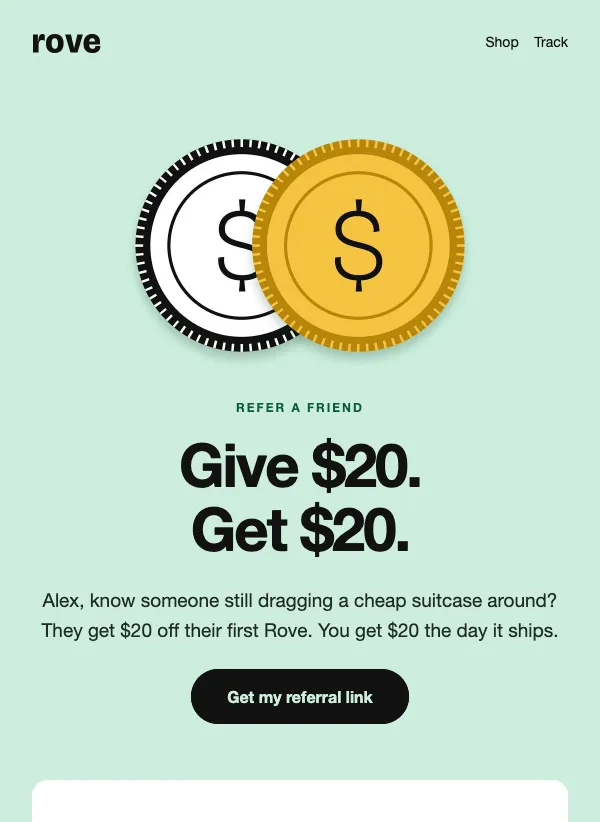 Give and get referral program
 Product launch email with color variants
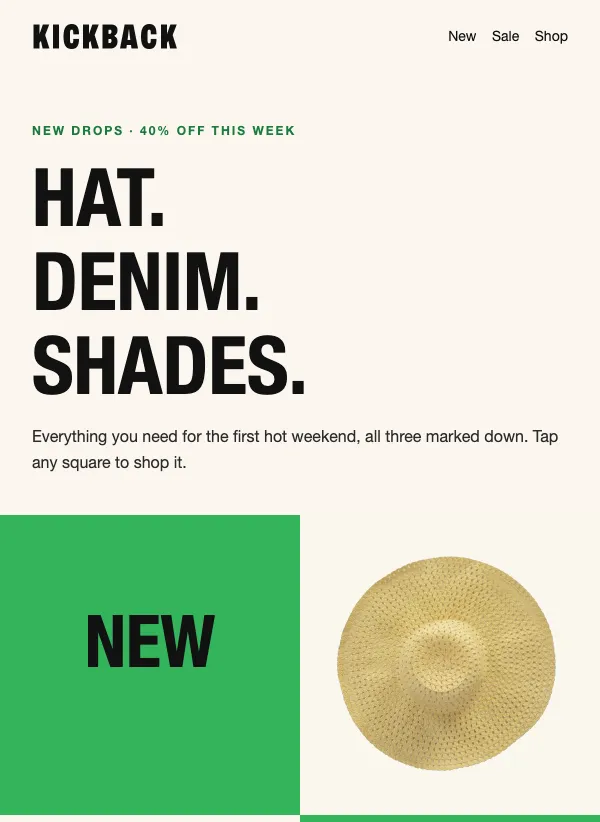 Sale email with a checkerboard grid
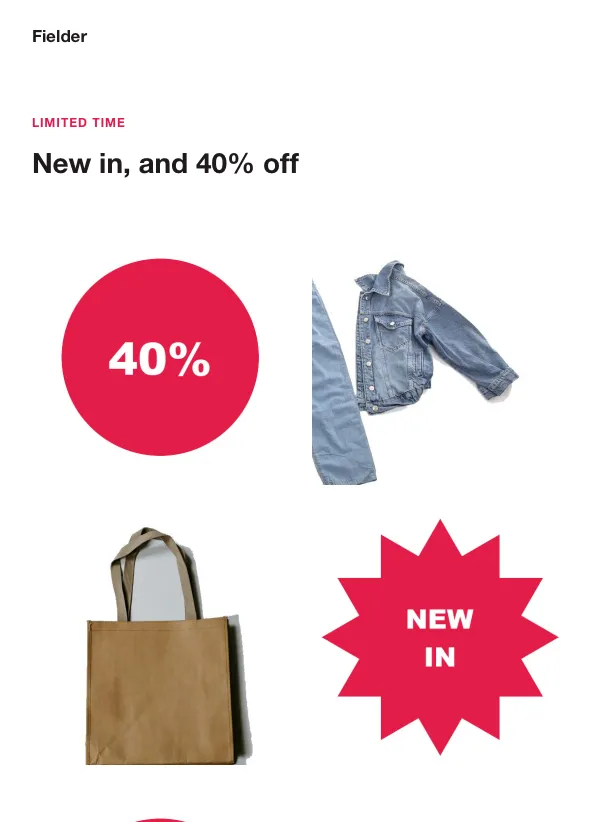 Sale email with sticker badges
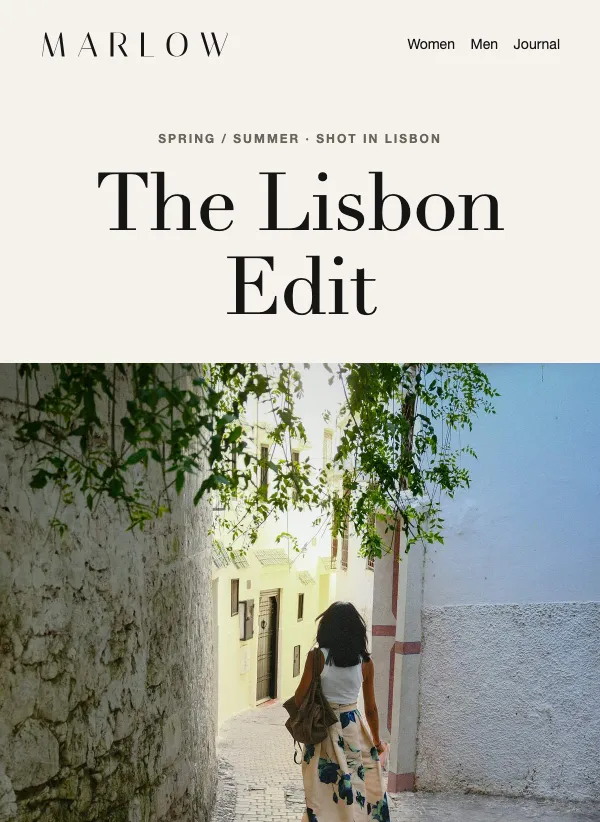 Fashion lookbook
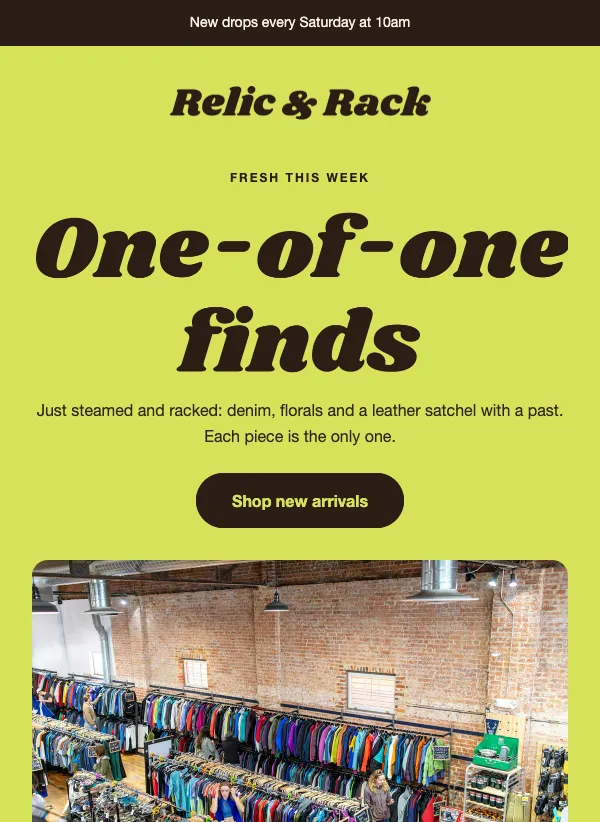 Thrift and vintage new arrivals
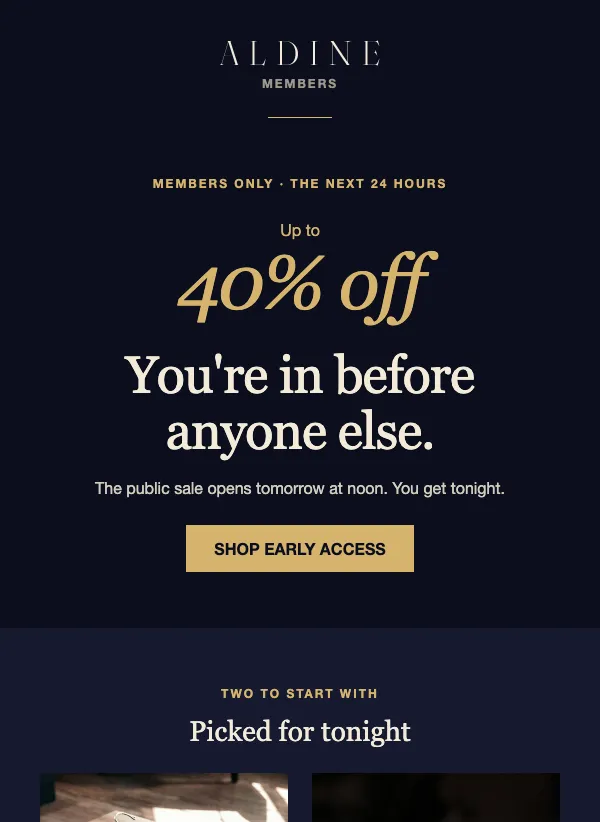 Members-only early access sale
A year of email for an online shop
An online shop has plenty of reasons to email, because something is always changing: new stock arrives, a favorite sells out and comes back, prices drop, a season ends. Each of those is a small piece of news a past customer may want to hear.
Most shops settle into a rhythm. New collections or products a few times a year. Restocks and smaller drops in between. The big gifting moments, which for most shops means Mother's Day, back to school and the stretch from Black Friday to Christmas. Clearance in the quiet weeks of January and late summer. And running underneath all of it, the emails that help someone who has just bought from you.
Sketch that rhythm for your own shop before you choose templates. A fashion label lives by its seasons. A shop selling coffee or vitamins lives by how fast a bag or a tub runs out. A gift shop may do most of its year in a few weeks. The templates on this page cover all three.
New in, back in stock and limited drops
A new product deserves an email of its own, with one large photo and the price in plain sight. "Meet the new headphones" is the shape for a single hero product, and "The spring edit is here" suits a whole collection. For shops that release in small batches at a set time, the drop teaser, "Friday. 10AM. No warning.", makes knowing exactly when to be ready part of the fun.
Restock emails are some of the easiest to write and the most welcome to receive. "It's back: the 24oz bottle in Slate" tells a customer who missed out everything they need in one short line. If something sold out quickly, a restock email can do more than a discount.
Preorders suit things you have not made yet. They let you test demand before you commit to a big order, and they give your biggest fans something to be first in line for.
Sales and the gifting season
Sales go best when the email is built around the deadline. Say when the sale starts, when it ends and what is in it, then give people a button for each department so they go straight to the part they want. "The sale is live. It ends Monday." does all of that in the subject line. If a loud sale is not your style, a calmer version works too: "A calmer kind of Black Friday" is the same discount from a shop that would rather not shout.
For the gifting season, give people a reason to choose from you and a date they can trust. A gift guide such as "The gift guide: four things people actually keep" narrows the choice to a few items at different prices. A shipping-cutoff email tells people the last day they can order and still get it in time. State that day as the day you can really promise, because a missed delivery costs more than the sale was worth.
Gift cards are the safety net for people who cannot decide. One short email near the end of the season, with a few amounts to pick from, is often all it takes.
Rewarding your best customers
The people who have bought from you before are usually your cheapest sales, so give them a reason to feel noticed. An early preview such as "A preview, before the sale opens to everyone" lets account holders shop before the public. A referral email, "Give $20, get $20", turns a happy customer into a recommendation. A birthday note or a members-only window needs only a short email and one button.
These work because they are about the customer, not the stock. Keep the offer simple and keep the rules out of the way.
The emails after someone buys
The weeks after a first order decide whether someone buys a second time. A few short, useful emails here do more for repeat sales than any offer. A care guide shows people how to look after what they bought, like "Taking care of your new bag". A size guide such as "Find your fit before you order" can save returns on the next purchase.
A couple of weeks after delivery, ask for a review. "Show us how it turned out" asks for a photo as well as a few words, which gives you pictures of real customers to use on your product pages and in later emails.
None of these need a discount. They work because they help, and people remember the shop that helped.
Let your customer questions write your emails
If you are stuck for something to send, open the inbox where customers write to you. The questions that come up again and again, about sizes, delivery times, how to use a product or which one to choose, are exactly the questions your other customers are wondering about but never asked.
Answer one of them properly in an email, with photos, and link to the products it mentions. A guide to choosing the right size of plant pot or the difference between your three roasts is useful, easy to write, and sells without feeling like selling. Keep a running list as the questions come in, and you will not run out of ideas.
Quiet weeks and clearing stock
Every shop has quiet weeks. They are a good time for clearance and outlet emails, which clear old stock to make room for new. The clearance and markdown templates here put the price cut first and let people browse a grid of what is left.
Quiet weeks also suit the softer emails: the people behind the shop, a look at how a product is made, what the press has said about you. They rarely sell much on the day, but they give customers a reason to choose you over a bigger shop next time they are ready to buy.
Questions
Are the ecommerce email templates free?
Yes. All of them are included on every plan, even the free one.
What emails should I send from my online store?
Start with new products, restocks and sales, then add the ones that follow a purchase, like a care guide and a review request. Send when you have something new to show or something useful to say.
Can I add my own products and prices?
Yes. Every template opens in the drag-and-drop editor, where you can swap the photos, product names, prices and links for your own.
Can a button link straight to a product page?
Yes. Any button or image can link to any page on your shop, so you can send people straight to a product or a collection.
How often should I email my customers?
Once a week suits many shops, with more around big sale dates. Keep to a rhythm your customers can expect rather than sending in bursts.
What should I send after someone buys?
A care or size guide in the first few days, then a review request a couple of weeks after delivery. They help the customer and cost you no discount.
Do these work for a shop that also sells in person?
Yes. Most of these emails suit any shop with customers who have bought before. Add your opening hours and address if you want people to visit as well as order.