Win-back email templates
For customers who have gone quiet: a reason to come back, and an easy way to do it.
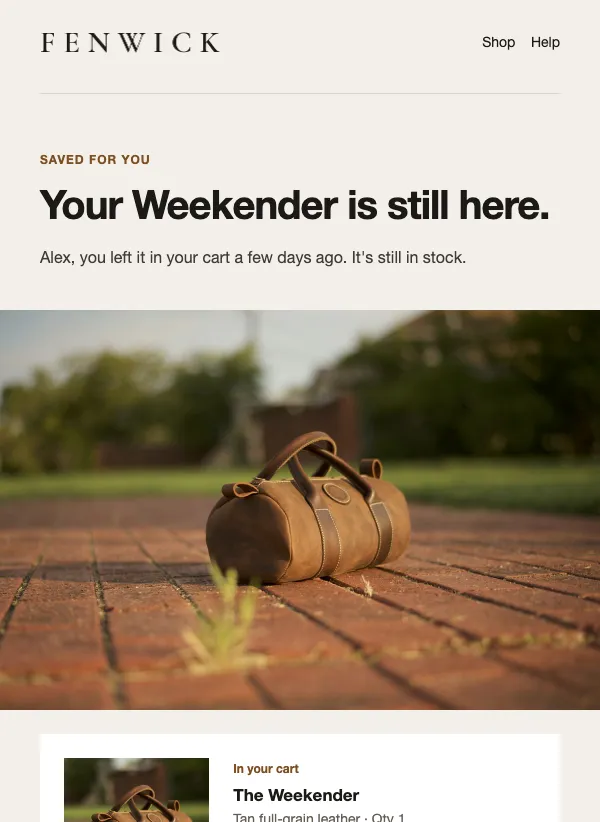 Abandoned cart reminder
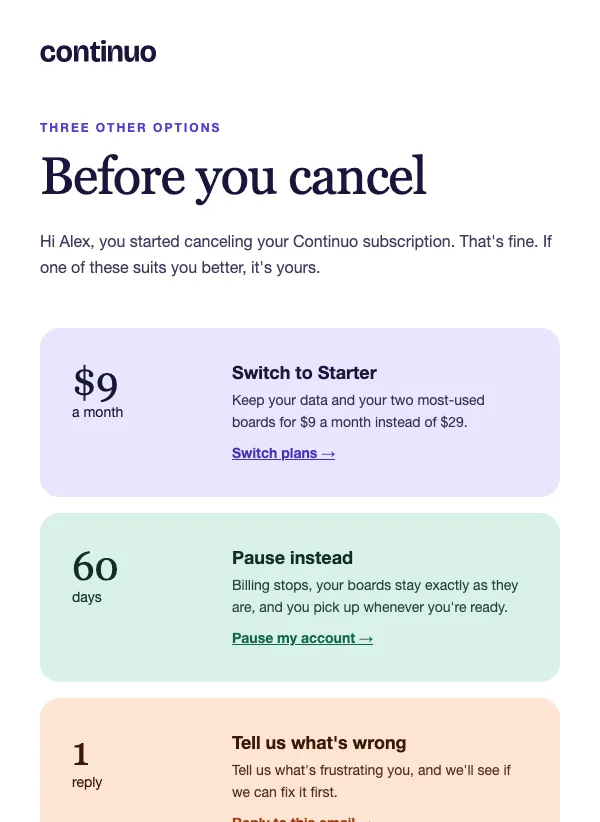 Cancellation discount offer
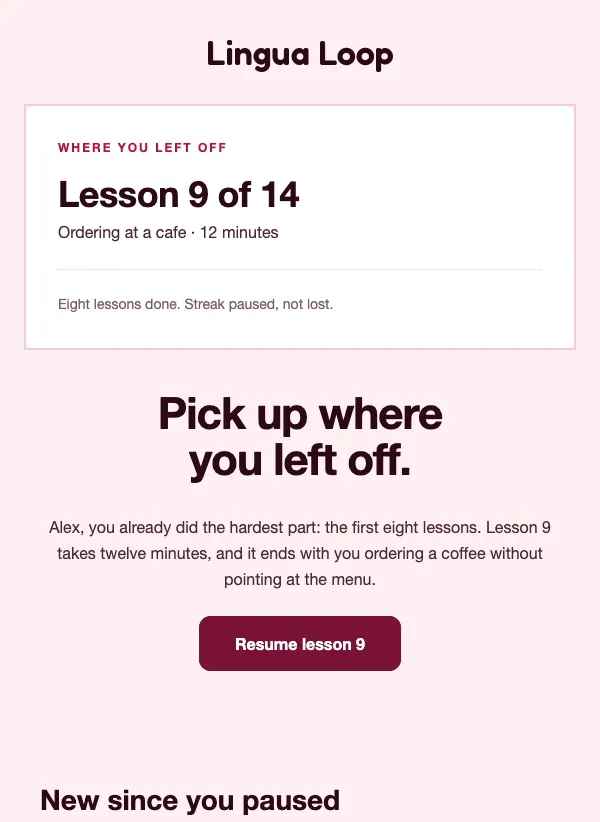 Online course win-back email for learners
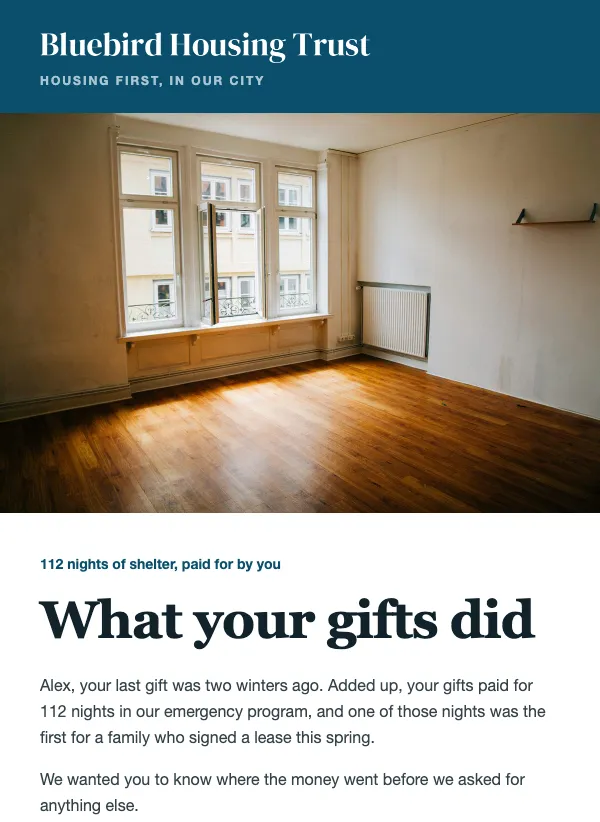 Lapsed donor email: what your gift did
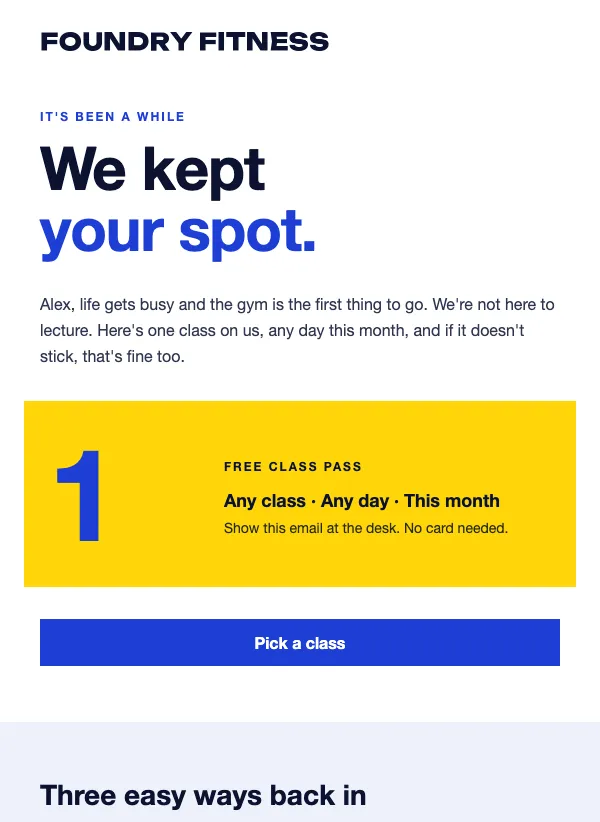 Gym win-back email with a free class pass
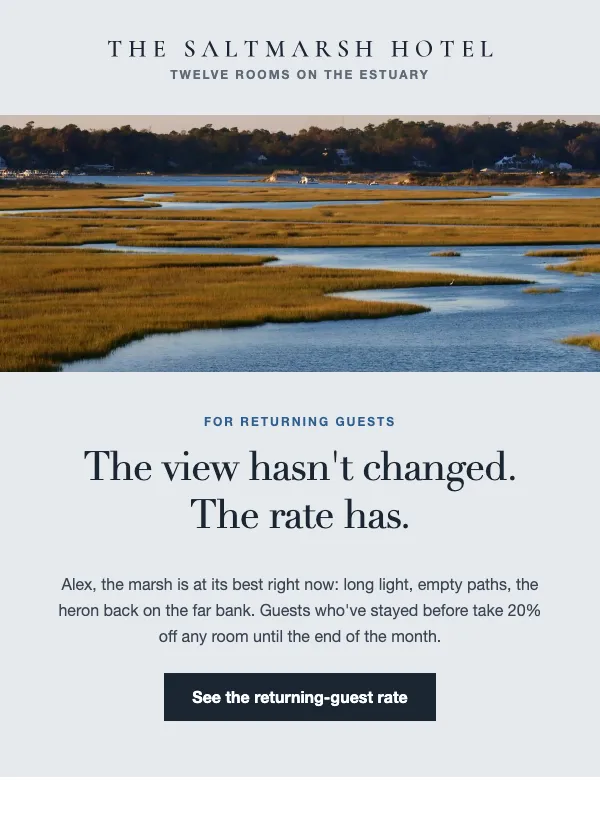 Returning guest offer email for hotels
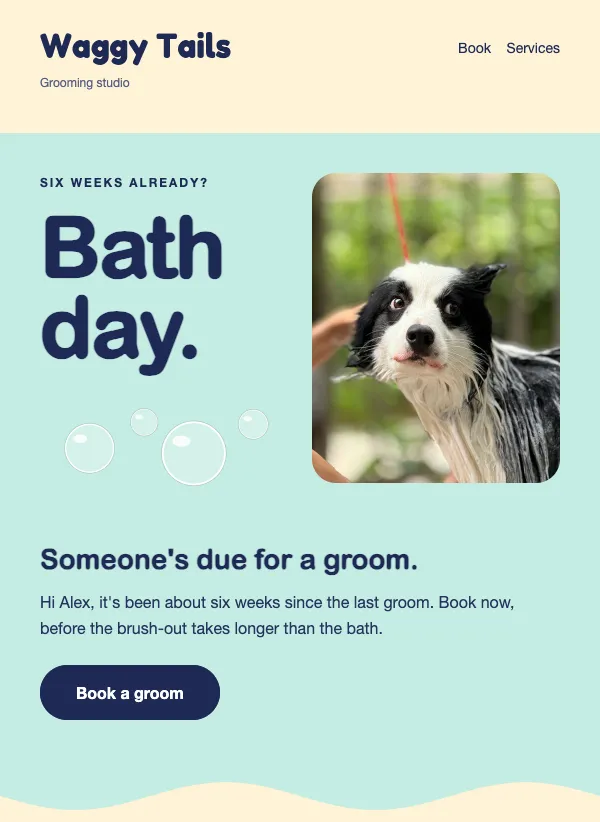 Pet grooming rebooking reminder
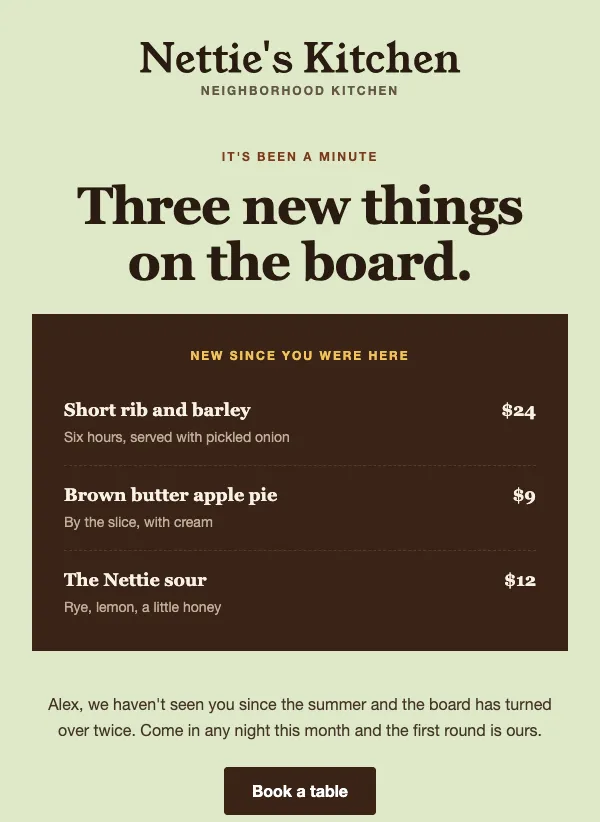 Restaurant we miss you email for regulars
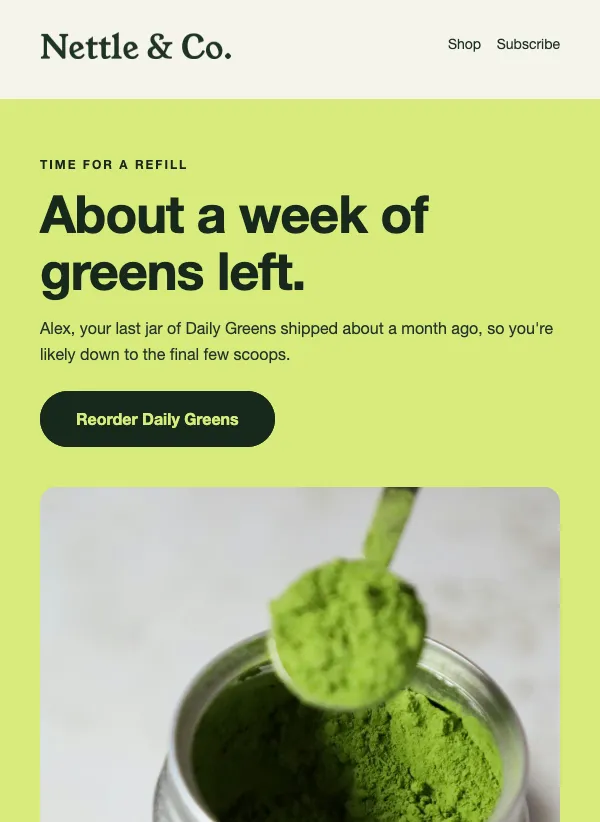 Product reorder reminder
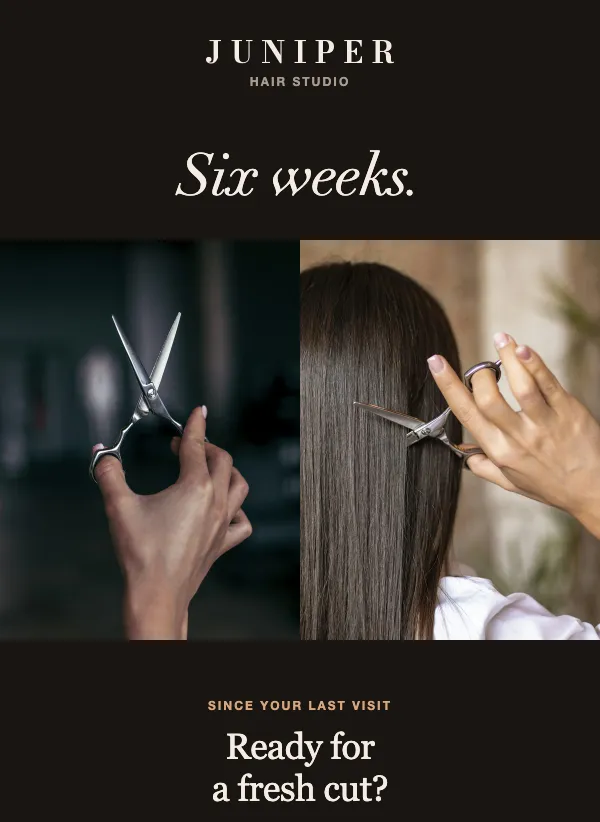 Salon rebooking reminder
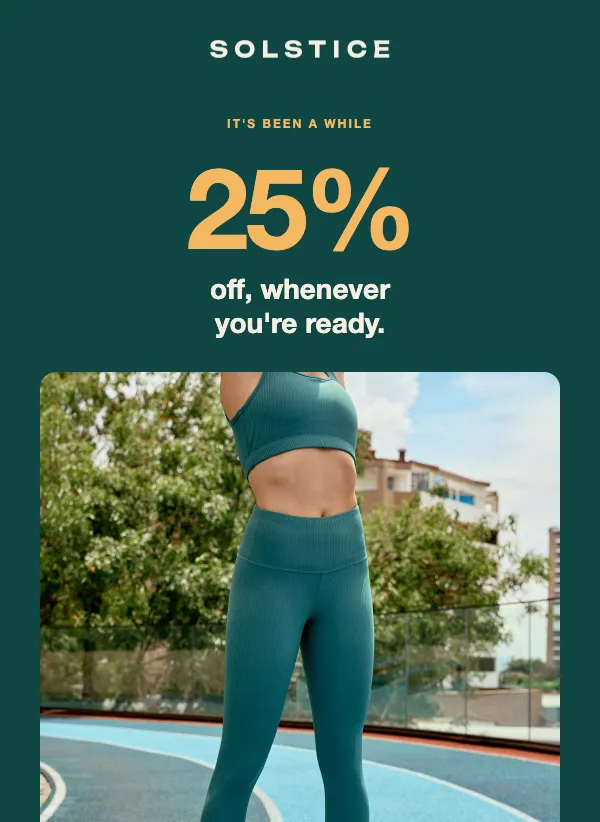 Win-back discount
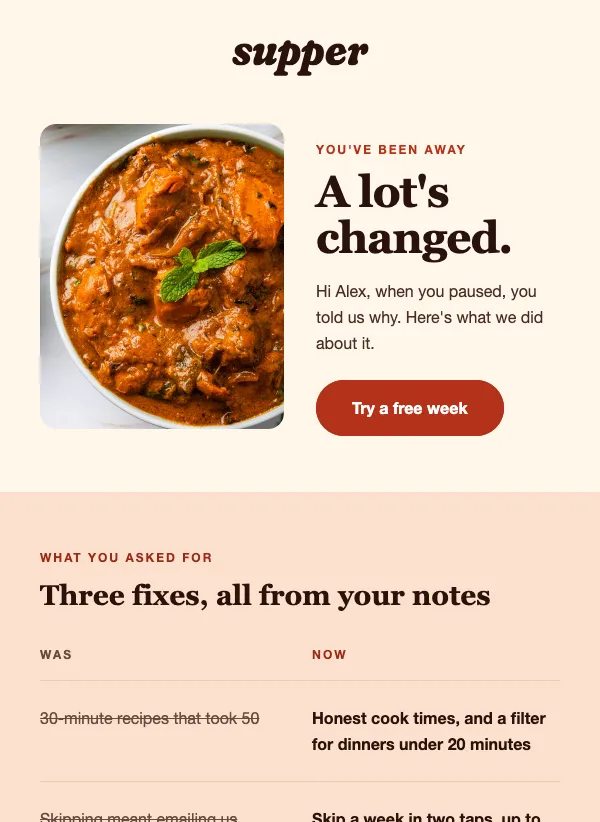 Win-back email for paused subscribers
Decide who has lapsed
Before you write a win-back email, decide what "gone quiet" means for your business. It depends on how often people normally buy. A coffee subscriber who skips a month has lapsed. A hair salon client is due back every six to eight weeks. Someone who bought a sofa might not need you again for years, and that is fine.
Pick a window a little longer than your usual gap between visits or orders. Anyone past that point is worth a reminder. Anyone well past it, by months, needs a stronger reason to return.
In EmailFig you can build a segment of contacts who have not opened an email in a set number of days, up to 90. That makes a good first list to work from.
Remind before you discount
Often people have not left at all. They just forgot. A friendly reminder at the right moment is enough, and it costs you nothing. Several templates on this page do exactly this. "Your six weeks are up" comes from a salon that knows its clients' usual gap. "Bath day is calling" does the same for a pet groomer. "Running low on your Daily Greens?" comes from a shop that knows roughly when a jar runs out.
Each one is timed to the customer's own habit, not to your sales calendar. That is what makes it feel helpful rather than pushy. Add a button that goes straight to booking or reordering, and keep the email short.
Carts left behind
A shopper who adds something to their cart and then leaves is one of the warmest lapsed customers you will find. They were close to buying. A short reminder a day or two later often brings them back.
Show the item they left, with its picture and price, and one button that takes them straight back to their cart. Then answer the question that may have stopped them: the delivery cost, how returns work, when it will arrive. "Your bag is still here" has the right tone: calm, a little personal, no pressure. One reminder is usually enough, and a second a day or two later is fine. More than that feels like being followed around the shop.
The cart template is the email itself: add your product, price and cart link. What notices an abandoned cart and sends the message is decided by your shop platform, so check what it offers before you design around it.
Give people a real reason to return
For customers who have been gone longer, a reminder is not enough. They need a reason. It might be something new: a new menu, a new product, a feature they asked for. "A lot's changed since you were here" leads with that. It might be an offer, like "Come back for 25% off, and see what changed", which pairs a discount with a reason to look.
If you know why people leave, speak to it. A subscription business can offer a pause or a smaller plan before someone cancels, which is what the churn template does with three options. Fixing the reason someone left usually works better than a discount.
Which template to start from
Match the template to why the person went quiet. If they are simply overdue, pick a reminder: the salon, grooming and refill templates each point to a booking or reorder button. If they left something in a cart, pick the cart nudge. If they stopped because something was wrong, pick the one that lists what you fixed. If they have been gone for a long time, pick the offer.
Whichever you choose, change the example details for your own: the usual gap, the product, the price and the button link. A win-back email only works when it is about that customer's habit, so a template with your real timing in it beats one with a clever line.
Writing the subject line
A win-back subject has one job: get a person who stopped opening your email to open this one. Lead with the reason, not the plea. "Your six weeks are up" is a fact about them. "A lot's changed since you were here" is news. "Before you cancel, three other options" is a useful offer at the right moment.
Skip "We miss you" and anything that sounds like guilt. Keep it short, put the specific part first, and let the email itself carry the warmth.
Know when to stop
Some people will not come back, and that is normal. After two or three win-back emails with no opens or clicks, stop emailing them. Remove them from your list, or at least leave them out of your sends. Before you do, a last email that simply asks "Do you still want to hear from us?" with one button to stay gives people a fair chance.
It feels wrong to shrink your list, but it helps. Email services like Gmail watch whether people open your mail. A long tail of people who never open it can push more of your emails into spam folders, including the ones going to your best customers. A smaller list of people who want to hear from you does better than a big list of people who do not.
Anyone who has unsubscribed stays unsubscribed. A win-back email is only for people who still want your mail and have simply gone quiet.
Common mistakes
The most common mistake is discounting first. If every lapsed customer gets 25% off, customers learn to lapse on purpose. The second is sending the same email to everyone: someone who is two weeks late and someone who left a year ago need different messages. The third is mailing a customer who bought yesterday because the segment was out of date, so check the list before you send.
Questions
Are the win-back email templates free?
Yes. All of them are included on every plan, even the free one.
What is a win-back email?
An email to a customer or subscriber who has gone quiet. It reminds them you are there and gives them a reason to come back.
How long should I wait before emailing a customer who has gone quiet?
A little longer than your normal gap between orders or visits. For a monthly product that might be six weeks. For a salon, eight to ten weeks.
Should I always offer a discount?
No. Try a reminder first. Keep discounts for people who have been gone a long time, and use them sparingly, or customers learn to wait for them.
How many win-back emails should I send?
Two or three, a week or so apart. If someone has not opened any of them, stop and remove them from your list.
Is it OK to email people who have not opened anything in a year?
Only if they are still subscribed. Send one honest email asking whether they still want to hear from you, and remove anyone who does not respond.