Travel email templates
Weekend offers, city guides and booking-season emails for hotels, hosts and tour operators.
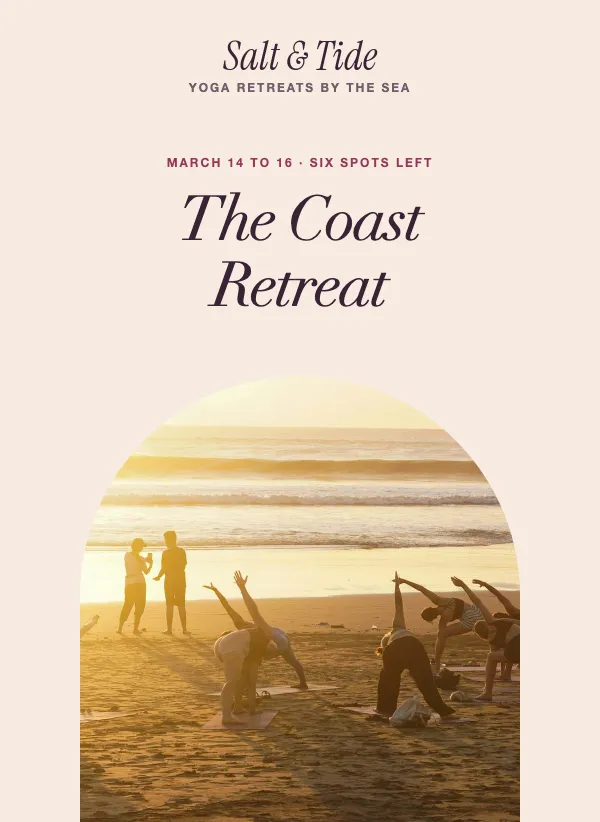 Yoga retreat promotion
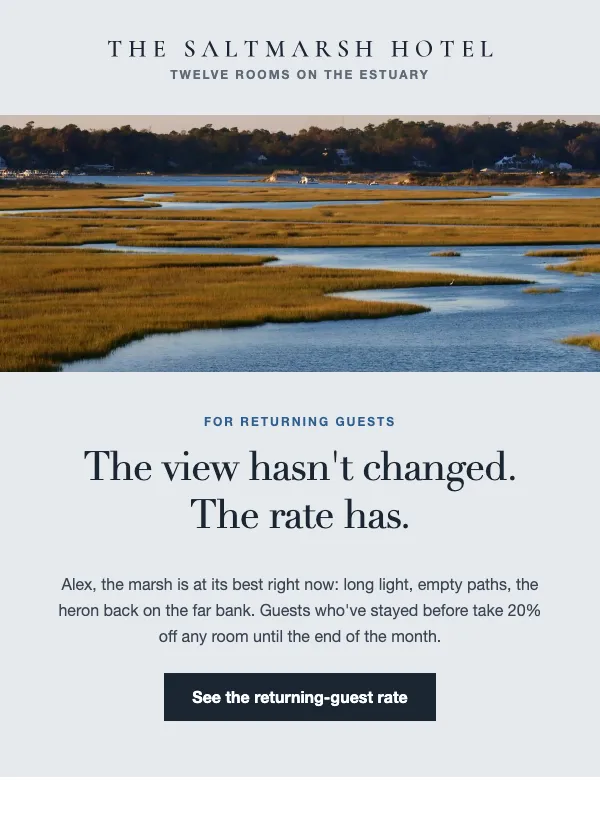 Returning guest offer email for hotels
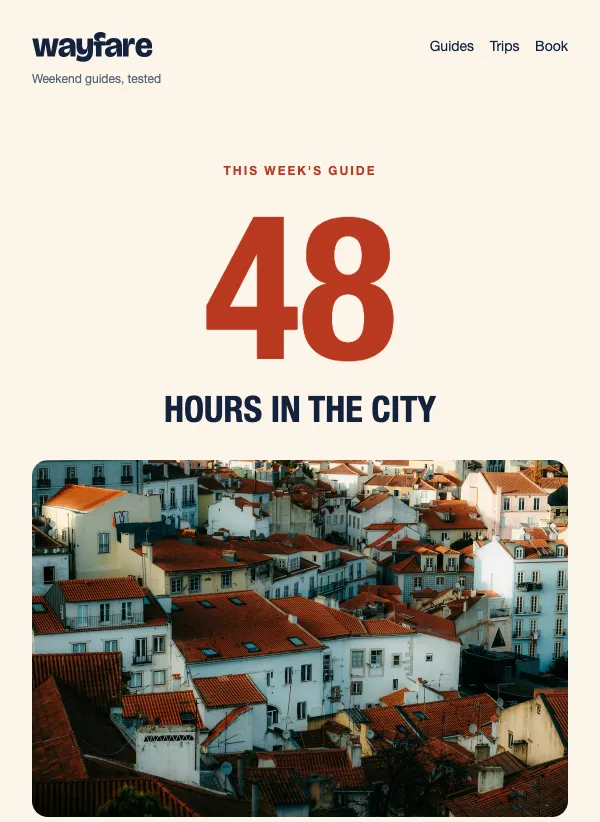 Travel weekend guide newsletter
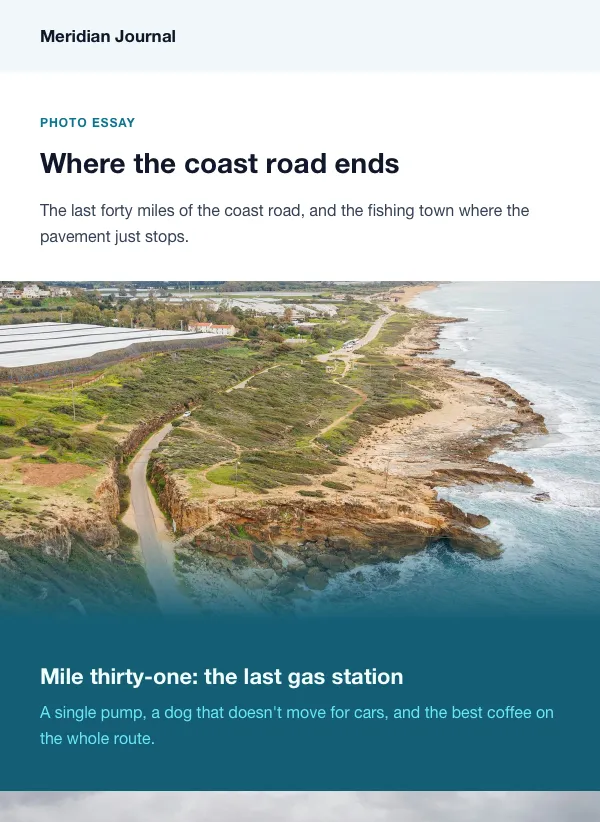 Photo essay newsletter
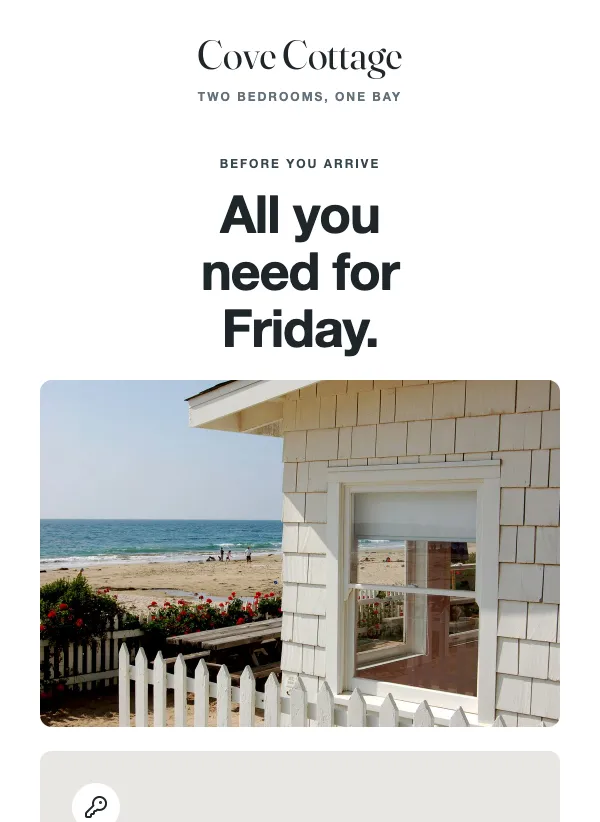 Vacation rental arrival guide
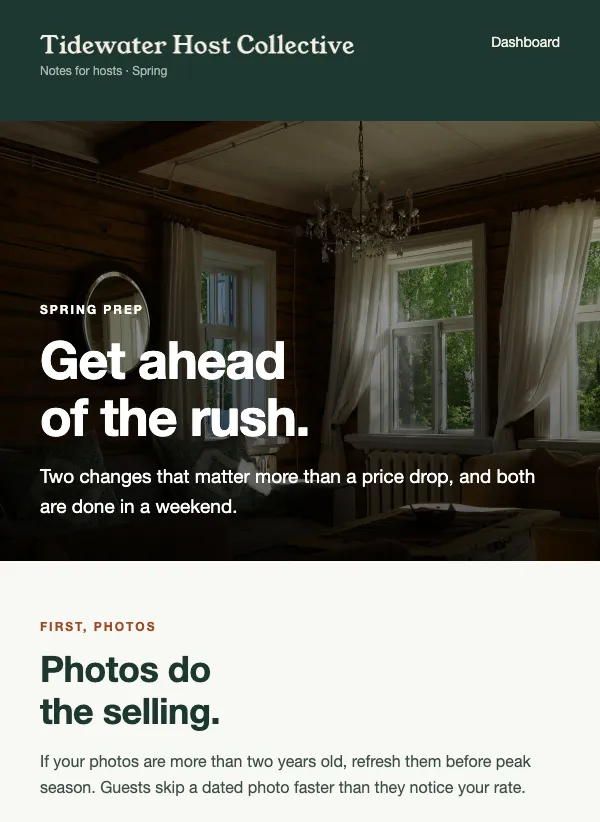 Vacation rental host newsletter
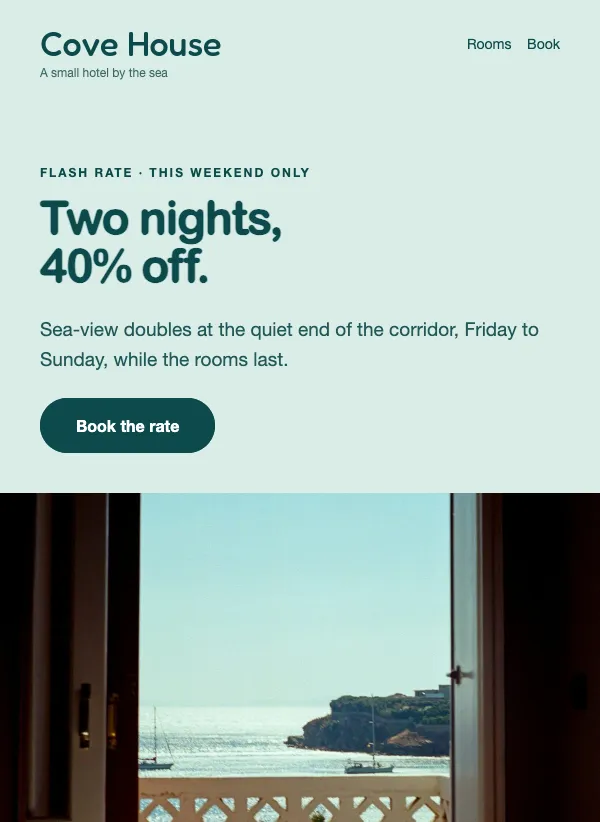 Hotel flash sale
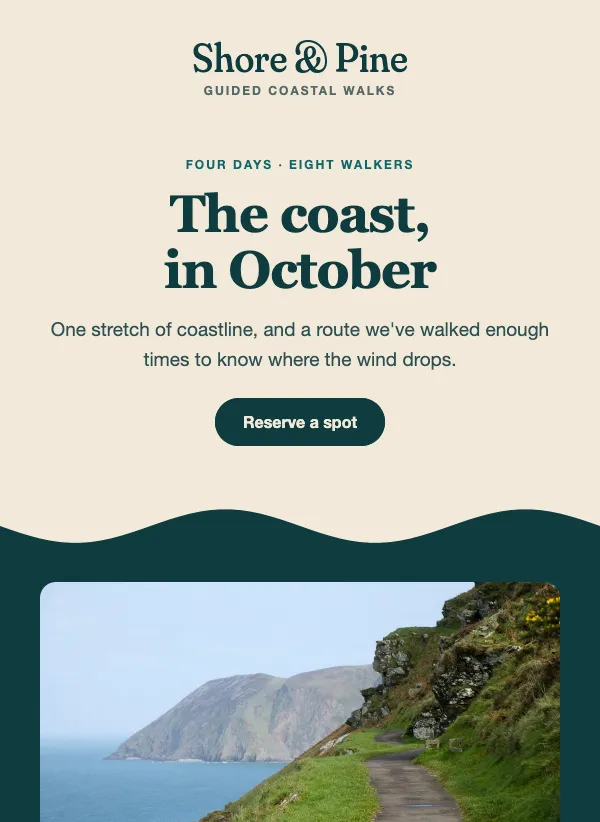 Travel itinerary email with wave dividers
 Travel agent monthly deals digest
 Vacation rental stays
 Small-group tour itinerary promotion
 Weekend getaway offer
When people plan trips
People do not decide on a trip all at once. They dream about it for weeks or months, look around, compare, and then book in a burst. The big summer vacation is often planned in the dark days of January and February. A weekend away is decided a week or two ahead, sometimes on the Thursday before.
Your emails can meet people at both stages. Inspiring emails, such as guides, photo essays and ideas for the season, keep you in mind while they are dreaming. Offers with dates and prices help them book when they are ready. A year of travel email is mostly a mix of those two, with a thank-you after each stay.
Selling a stay
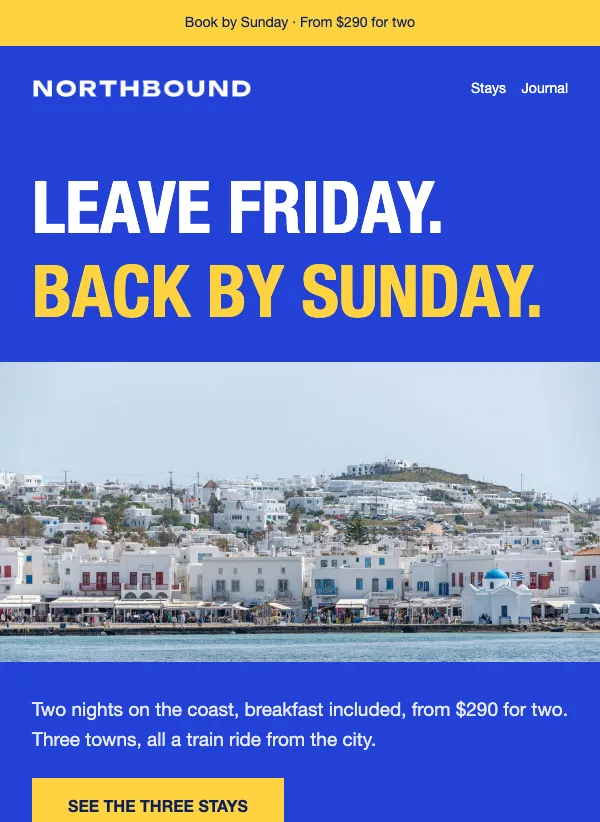
An offer email for a hotel or rental needs three things above everything else: where it is, what it costs and when it is available. "Two nights with us, 40% off" gives the length of stay and the deal in one short line, and the preheader, "This weekend only, subject to availability.", adds when. The hotel offer template then lists the stay dates, the rate, what is included and the book-by date, with the fine print kept short and a button to check availability.
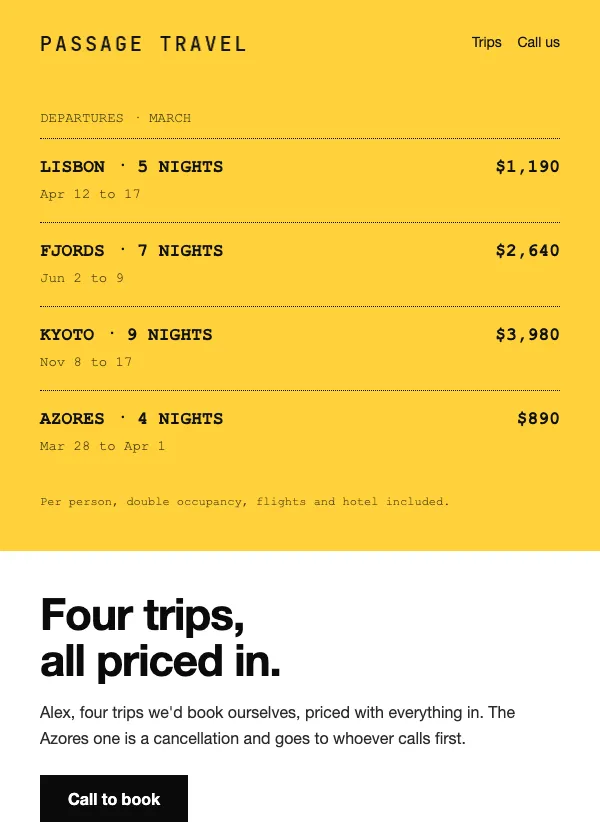
Give a price "from" and say what is included, such as breakfast, parking or a late checkout. "Two nights by the sea, from $290" works because the price is in the subject line. People compare stays side by side, and the small extras often decide it.
Offers do the most good in the weeks either side of your busy season, when the weather is often still good and the rooms are not yet full. Save your discounts for those dates rather than the weeks that would sell out anyway.
Emails that make people want to go
Not every travel email should sell. A guide to a city, a coast or a region gives readers something to save and come back to, and it makes your hotel or tour the obvious choice when they decide to go. "48 Hours in the City: our weekend guide" promises something specific and useful.
Write guides from what you know and visitors do not: the cafe you send every guest to, the walk that avoids the crowds, the beach that is quiet before 10. Local knowledge like that is hard to find anywhere else, and it shows you know the place.
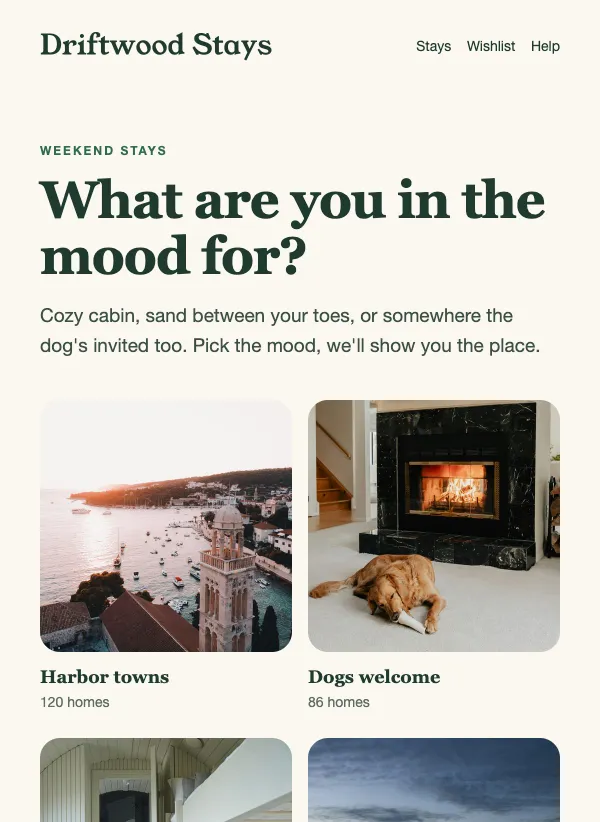
A photo essay does the same with pictures. Let a few large photos tell the story of a place, with a line or two under each, and one link at the end. The coast photo essay template is built that way. A mood-based browser, like the weekend stays template, lets readers pick the kind of trip they fancy, from a harbor town to somewhere the dog is welcome, and click through to stays that match.
Subject lines for travel emails
Good travel subject lines either give a fact or ask a question the reader wants to answer. "Two nights by the sea, from $290" gives the place, the length and the price. "What are you in the mood for this weekend?" invites a click to find out. "Where the coast road ends" is a small mystery that suits a photo essay.
Put the place name near the front, since people scan for somewhere they already want to go. Skip the sunshine emoji and the capital letters. A plain line that names a destination reads as a real offer and is less likely to look like spam.
Retreats and group trips
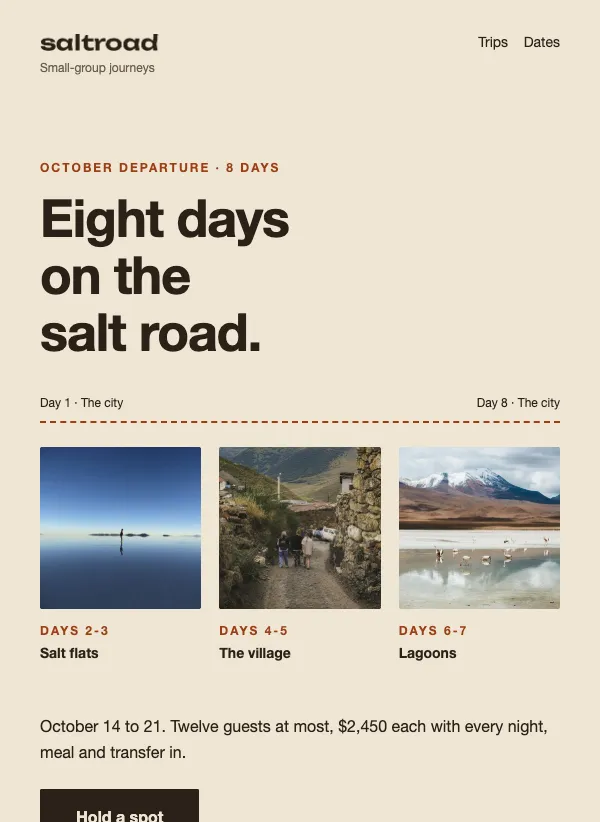
A retreat or a group trip sells on the whole experience, not the room. The retreat template shows the setting, what the price includes and how many spots are left. "A weekend at the coast, mat included" tells a yoga student exactly what they are getting.
Be honest about numbers. If six spots are left, say six, and update the next email. Small groups are part of the appeal, and a real count is more convincing than a countdown.
For hosts and owners
If you manage vacation rentals for owners, or run a group of hosts, you have a second audience: the people who own the homes. They want practical news before the busy months, such as what to change and what guests expect. "Get booking-season ready before the calendar fills up" is that kind of email, sent at the moment it is most useful.
The host template keeps it to two changes: refresh the listing photos, and reply to guests within an hour. Short, specific advice like that gets read and acted on. A long checklist does not.
Your past guests are your best list
The people most likely to book with you are the ones who have stayed before. They know the place, they liked it enough to give you their email, and many travelers return to somewhere they loved.
Send past guests a short thank-you after they leave, with a photo of the place and a line inviting them back. Then write again around the same time next year, when they may be planning the same trip. An email that says "it's nearly a year since your stay", with the dates still open, can fill rooms that a discount would not.
Keep these guests on their own list, so your returning-guest emails do not go to people who have never stayed. If you collect addresses at check-in or on your booking form, tell people they will hear from you and let them say no.
Questions
Are the travel templates free?
Yes. All of them are included on every plan, even the free one.
Should I put prices in a travel email?
Yes, if you can. A "from" price with the dates it applies to helps people decide, and it saves them clicking through only to find it is not for them.
How far ahead should I send offers?
For weekends away, a week or two ahead. For main vacations, months ahead, often in January and February for the summer.
What should I put in my hotel newsletter?
A mix of offers and reasons to visit: a seasonal deal, a guide to the area, news about the property. Mostly useful emails, with an offer now and then.
Do these work for a vacation rental host?
Yes. There are templates for weekend stays and for hosts getting ready for booking season, and every template opens in the drag-and-drop editor so you can change any of them.
Can I add my own photos?
Yes. Upload your own photos in the editor. Photos of your own rooms, views and breakfast table show guests exactly what they will get.