Feedback and review email templates
Ask for a rating, a review or a few words while the visit is still fresh.
What a feedback email is for
A feedback email asks one person for one small thing: an opinion, a rating, a review, a few sentences about working with you. That makes it different from a newsletter, which can be read and forgotten. A feedback email only works if the reader does something, so every choice, from the subject line to the button, should make that one thing easier.
Decide what you will do with the answer before you write a word. A survey whose results go nowhere teaches customers not to bother next time. A review request has a plain goal: a public review that helps the next customer decide. A testimonial request wants a few sentences you can quote. A research invitation wants a conversation. Pick one job per email and leave the rest for another day.
When to send it
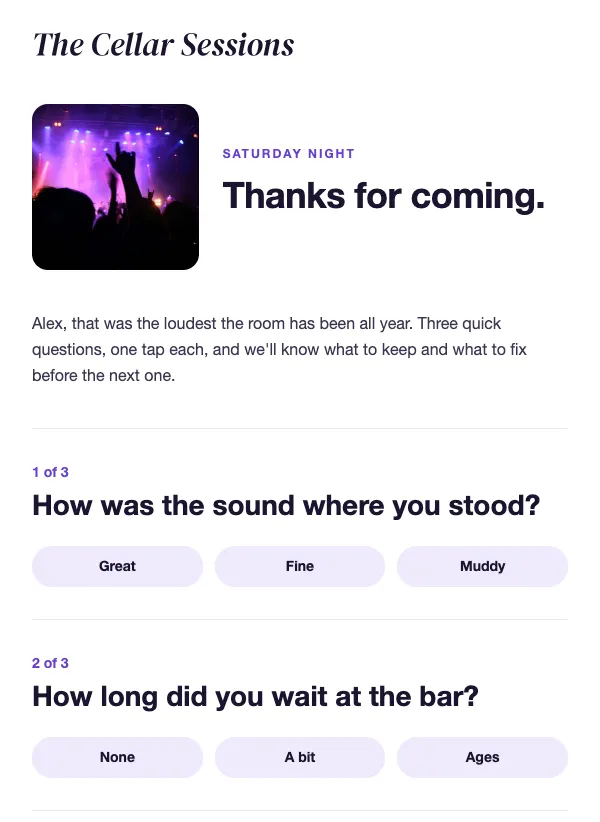
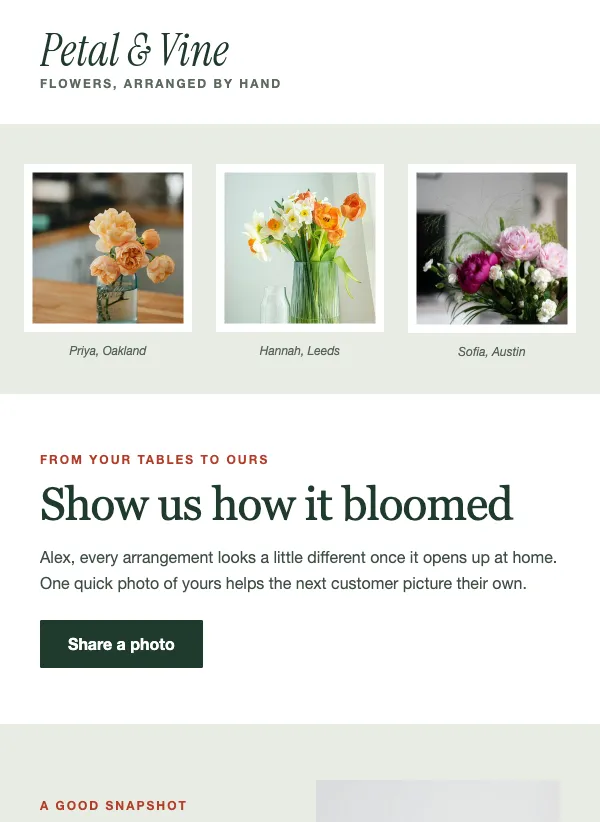
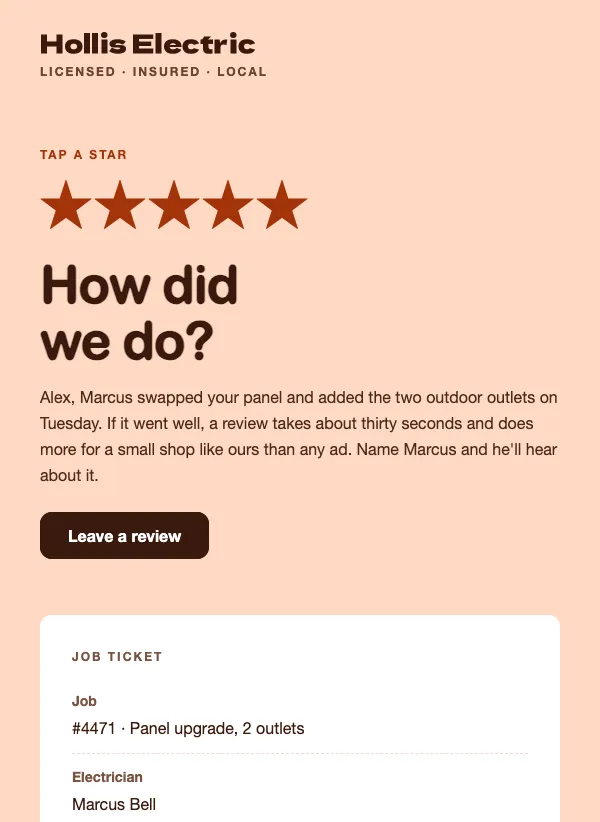
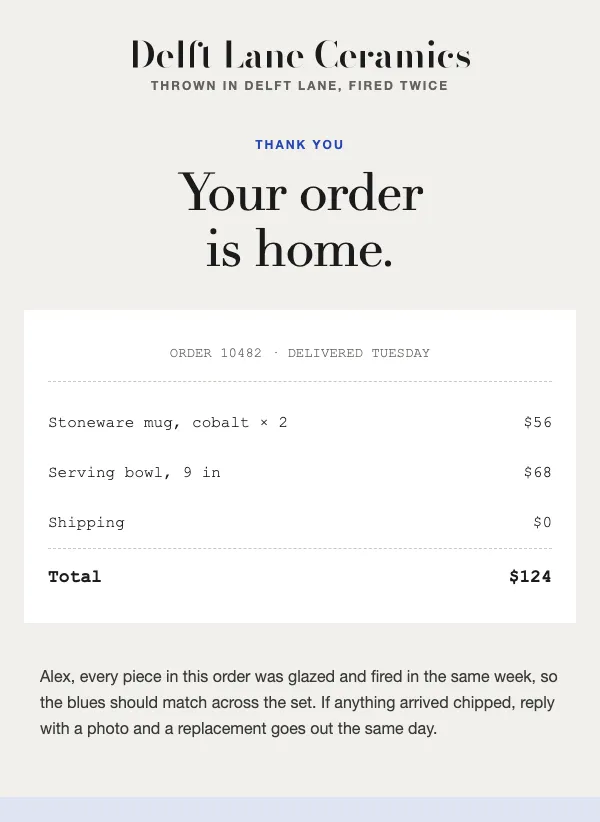
Timing counts as much as wording. Ask while the experience is fresh, but after the customer has had time to form an opinion. For a trade job, that is the day after the visit, which is what the home service review request is built for. For a gig, a class or a meetup, it is the morning after, which suits the event feedback survey. For something you ship, wait a day or two after the delivery date, as the order thank-you does, or about a week if you want a photo of the product in use.
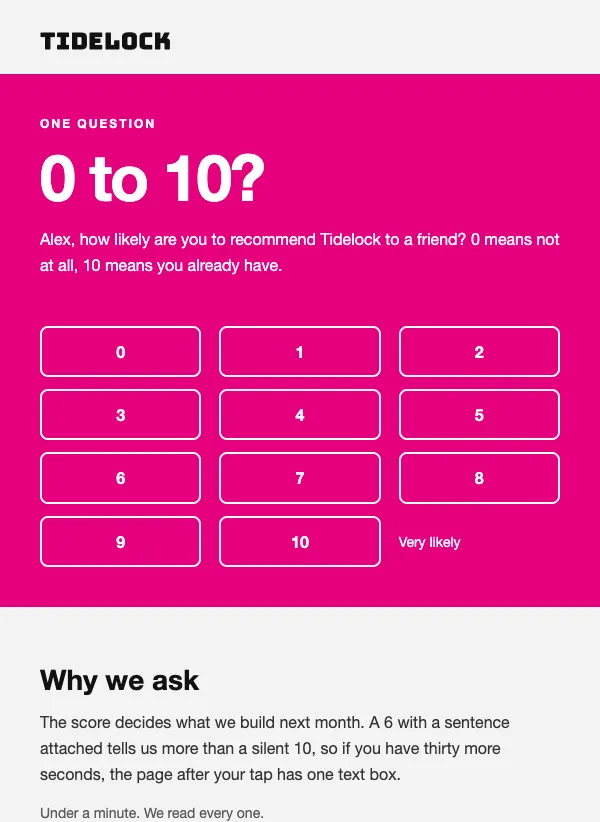
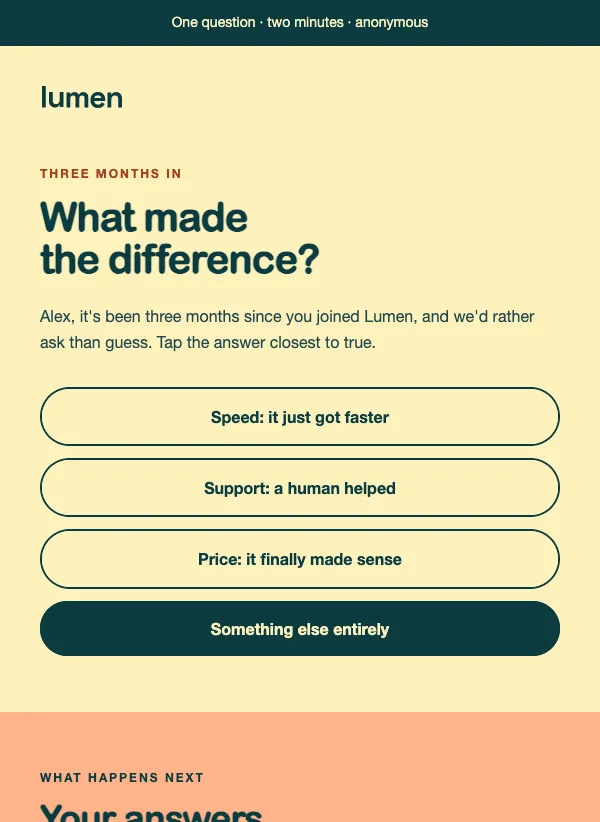
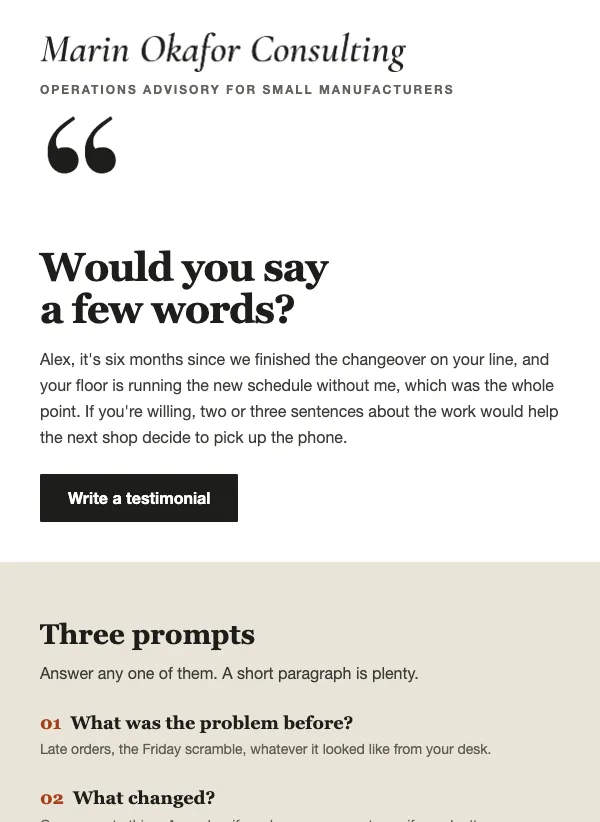
For software or a membership, a few weeks after signup is a good moment for the 0 to 10 rating, and a few months in suits the one-question survey. A testimonial request belongs a few weeks after a project wraps, while the client is still pleased with the result.
Campaigns can be scheduled, so you can write the email while the event is still on and set it to go out first thing the next morning. A weekday morning is a reasonable default, since a short request is easy to answer from a phone or a desk.
What to put in it
Keep it short and say who is asking and why. A line such as "we would rather ask than guess" is enough. Tell people how long it takes, because "one question, two minutes" removes the main reason for ignoring a survey. The one-question survey says exactly that in a strip at the top, then shows four answers as full-width buttons. That strip also says the survey is anonymous, so change the word if you tie answers to a name.
Make the first step a single tap. The 0 to 10 rating shows all 11 numbers as links, and the event survey puts three questions in the email with a row of answer buttons under each. The email carries the ask, so link each button to a page or form of your own that records the answer and then offers a text box for anyone who wants to say more.
Finish with a human sign-off. A name, a role and a photo tell people a real person reads the replies, and replies are often worth more than the scores.
Reviews, photos and testimonials
Asking for words is harder than asking for a tap, so lower the effort. The testimonial request gives the client three numbered prompts to choose from and a sample quote that shows how long the answer should be. Often people are not refusing; they just do not know what to write.
The photo review request shows three customer photos so buyers can see what a good one looks like. Ask each person before you show their photo. If you offer a thank-you, say exactly what it is and what earns it. Some review sites do not allow rewards tied to a good rating, so tie any thank-you to sharing a photo or a sentence, never to the score.
For a public review, link the button straight to the page where the review is written, whether that is Google, Yelp or your own site. Every extra click loses a few people. The home service template links its row of five stars and its button, and also gives an unhappy customer a way to reach you directly.
Writing the subject line
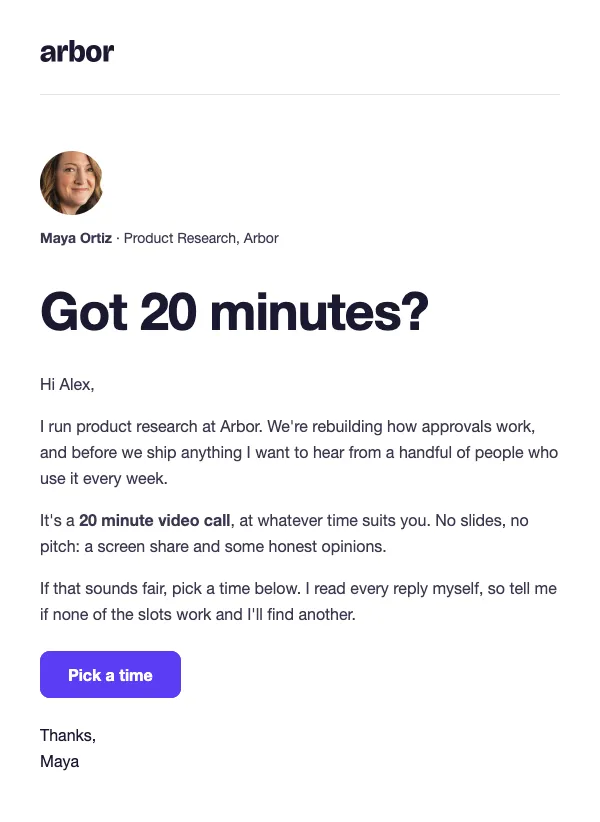
Write it the way you would ask in person. "How was Tuesday's job?" works because it is specific and sounds like the electrician. "One question, two minutes" says what is being asked and what it costs. "Got 20 minutes?" suits a research call, and "Would you say a few words?" suits a testimonial. A short subject line also fits on a phone screen without being cut off.
Avoid "Your opinion matters" and "We value your feedback". Every customer has seen them, and they say nothing about what you want. Skip capital letters and pleading, and put the first name or the job in the subject line if you can.
Which template for which ask
For a quick pulse, use the one-question survey or the rating email. The survey fits "what made the difference" questions, and the rating email suits a recommendation score with a face option for people who would rather tap a mood. For a night out or a class, use the event survey. For trades and local services, use the home service review request.
For shops, the order thank-you sets out the receipt, adds a care tip and asks for a review, and the photo request is the better fit for products that look different in a home. For consultants, coaches and agencies, use the testimonial request. For product teams recruiting interviewees, use the research call invitation.
Common mistakes
The most common is asking too much. A long survey gets abandoned halfway; ask one thing, and ask for more only once someone has replied. The second is asking too early, before the parcel has arrived or the job has been checked, which reads as pushy.
The third is never closing the loop. If you changed something because of last quarter's answers, say so in the next email, and people will answer again. The fourth is sending from an address nobody reads. Let people reply, and read what arrives. Last, do not ask the same people too often. One request after each job or order is plenty.
Questions
Are the feedback email templates free?
Yes. All of them are included on every plan, even the free one.
When is the best time to ask for a review?
When the experience is fresh but finished. For a service job, the day after. For an order, a day or two after it arrives. For a project, a few weeks after it wraps.
How long should a survey email be?
As short as you can make it. One question is best, and the email should say how long it takes. Offer a longer survey as a button for people who want to say more.
How do I ask for a testimonial without sounding awkward?
Be specific about the project, keep the ask small, and give the client prompts to answer. Two or three sentences is enough, and an easy way to say no keeps it friendly.
Can I offer a discount for a review?
You can thank people for sharing a photo or a few words, and say exactly what the thank-you is. Keep it tied to the act of sharing, not to a good rating, because some review sites do not allow rewards for positive reviews.
How do I collect the answers?
Link each answer button or number to a page or form you set up, such as a form tool or a thank-you page on your site. The template is the email that asks. Where the answers land is up to you.